
Financial Lines Insurance
Helping businesses address complex liability risks
Why Choose Zurich for Financial Lines Insurance?
Financial Lines risks can emerge from shareholder challenges to management statements and representations, regulatory scrutiny, disputes with competitors or customers, and responsibilities toward employees in the workplace and as fiduciaries of company benefit plans. Zurich offers Management and Professional Liability Insurance solutions that can complement sound risk management practices and help organizations address certain financial exposures, including potential personal liability faced by directors and officers. Our underwriters work with brokers and customers to examine relevant exposures and determine an insurance approach with the organization’s needs in sight.
This connected view helps organizations consider how allegations involving leadership decisions, professional services, employment practices, fiduciary responsibilities, employee dishonesty or crime events may affect their insurance program, and where separate policies may need to work together. Zurich underwriters specialize in industry verticals such as Financial Institutions, Retailers, Manufacturers, Technology firms, and Life Sciences companies – customizing their underwriting and coverage solutions to the needs of our insureds.
Types of Financial Lines Insurance
Management Liability Insurance
Management Liability Insurance helps companies and their leaders address risks tied to executive decision-making, governance, employment practices and fiduciary responsibilities. As regulatory scrutiny, litigation and emerging business risks continue to evolve, these solutions support an organization’s response to potential claims involving directors, officers, managers and other business leaders.
Learn about Management Liability Insurance
Solutions for management liability include:

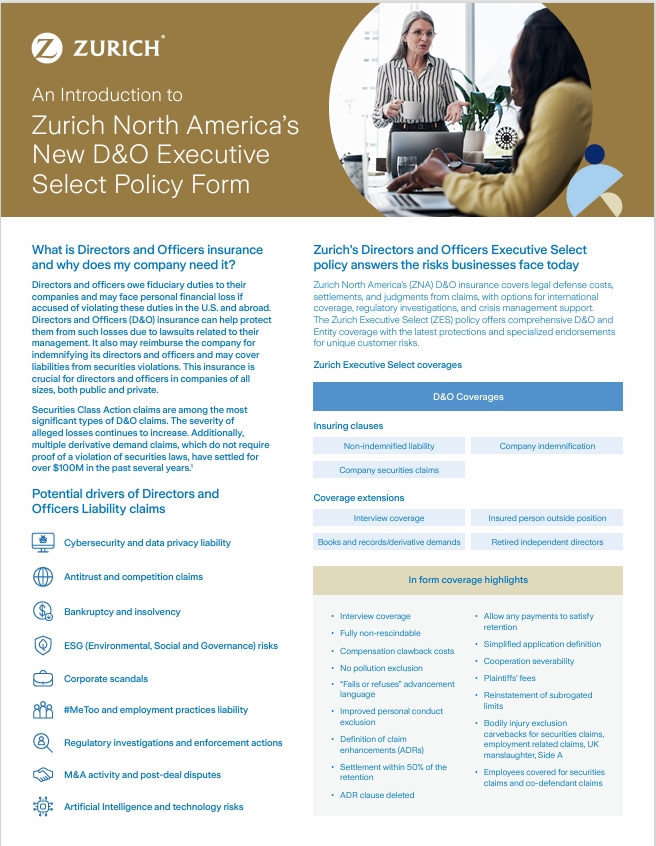
Directors and Officers Liability Insurance
Directors and Officers Liability Insurance, commonly called D&O Insurance, can help protect an organization and its directors or officers against certain claims alleging wrongful acts in the management of the organization. Claims may involve challenges of governance decisions, alleged breaches of duty, securities-related matters, regulatory investigations or decisions affecting shareholders and other stakeholders.

Crime Insurance
Crime Insurance can help organizations address certain direct financial losses resulting from covered criminal acts. Depending on the policy, this may include employee theft, forgery, fraudulent instructions, computer fraud or social engineering fraud. Crime coverage differs from liability coverage because it may respond to a company’s own covered financial loss.

Fiduciary Liability Insurance
Fiduciary Liability Insurance can help address certain claims alleging breaches of fiduciary duty in the administration of employee benefit plans. Examples may include allegations involving plan communications, enrollment, investment oversight or the handling of plan assets.

Employment Practices Liability Insurance
Employment Practices Liability Insurance, or EPLI, can help organizations respond to certain employment-related allegations. These may include wrongful termination, discrimination, harassment, retaliation or other alleged violations involving applicants, employees or former employees. Coverage terms and the people or entities insured depend on the policy.

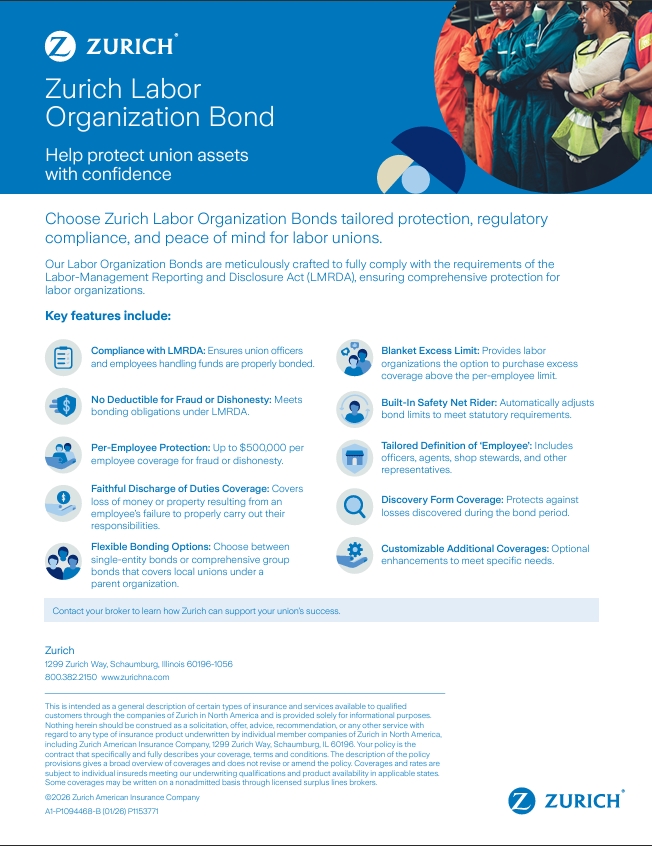
Employee Retirement Income Security Act Fidelity Bonds
An ERISA fidelity bond is designed to help protect an employee benefit plan from certain losses caused by fraud or dishonesty by individuals who handle plan funds or other property. ERISA fidelity bonds serve a different purpose from Fiduciary Liability Insurance and may be required for certain employee benefit plans under federal law.
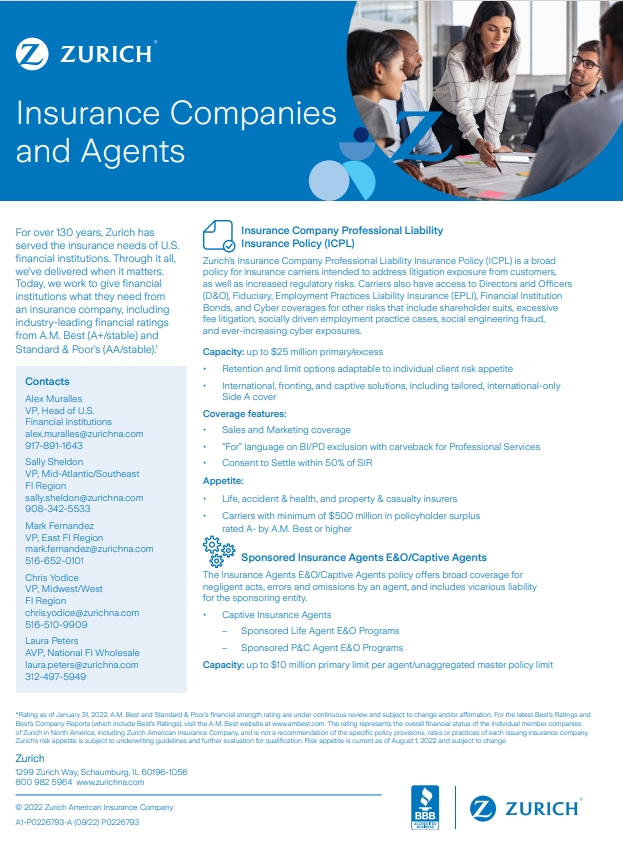
Professional Liability Insurance
Professional Liability Insurance can help professionals and organizations address certain claims connected with services or advice provided to clients. Coverage may respond to covered claims alleging negligence, errors, omissions, misrepresentation or failure to perform professional services. It differs from Directors and Officers Liability Insurance because it generally focuses on work performed for clients or customers rather than decisions made while governing or managing an organization. Policy terms typically reflect the services provided and the exposures associated with the organization’s industry.
Financial Lines Coverages: What’s the Difference?
Financial Lines products address different types of business exposures. An organization may purchase Financial Lines coverages collectively on a packaged policy, or coverages may be purchased separately.
- Directors and Officers Liability Insurance focuses primarily on alleged wrongful acts connected with governing or managing an organization.
- Employment Practices Liability Insurance focuses on certain allegations involving employment practices and workplace decisions.
- Fiduciary Liability Insurance focuses on alleged breaches of duty involving employee benefit plans.
- Crime Insurance focuses on certain direct financial losses caused by covered dishonest or fraudulent acts by employees.
- Professional Liability Insurance focuses on allegations connected with professional services or advice provided to clients.
Situations That May Lead to a Financial Lines Claim
Financial Lines claims can arise from decisions, services and events encountered during normal business operations. Depending on the coverage and policy terms, examples may include:
- Investors allege that directors or officers made misleading statements or failed to fulfill their duties.
- A former employee alleges wrongful termination, discrimination or retaliation.
- Employee benefit plan participants allege that those responsible for administering the plan failed to meet their fiduciary duties.
- A client alleges that an error, omission or delay in professional services caused a financial loss.
- An employee or outside party allegedly steals company funds or uses fraudulent instructions to initiate a payment.
- A regulator investigates alleged conduct connected with management decisions, professional services, privacy or cybersecurity practices.
These examples are illustrative and do not establish coverage. Whether a policy responds depends on the facts of the claim and the applicable policy terms, conditions, limits and exclusions.



FAQs
Financial Lines Insurance can help organizations respond to certain claims arising from leadership decisions, professional services, employment practices, fiduciary responsibilities, crime and cyber events. Depending on the policy, coverage may apply to eligible financial losses, defense expenses and other specified costs that are not addressed by insurance focused primarily on property damage or bodily injury.
Financial Lines Insurance may be important because some business risks can result in costly claims, defense expenses and operational disruption that may not be addressed by traditional property and casualty policies. Additionally, situations may arise where company executives could be personally liable for situations arising out of their capacity with the company. Financial Lines Insurance helps to protect the organization, eligible insured individuals or both, depending on policy terms. As organizations grow, expand services, manage employees or face increased scrutiny, their coverage needs can become more complex. Reviewing policy limits, exclusions, claims support and tailored coverage options can help businesses evaluate whether their insurance program aligns with their specific risks and needs.
An organization’s Financial Lines needs depend on its structure, activities and risk profile.Business owners, risk managers and brokers may begin by considering the followingquestions:
- Does the organization have a board of directors, investors or outside stakeholders?
- Does it make decisions that could affect shareholders, customers or other parties?
- Does it employ people or regularly make hiring, promotion, compensation ortermination decisions?
- Does it sponsor or administer employee benefit plans?
- Does it provide specialized services or advice to clients?
- Does it collect, store or process confidential, personal or financial information?
- Could theft, fraudulent payments or social engineering cause a direct financial loss?
- Is the organization subject to industry-specific legal, contractual or regulatoryrequirements?
The answers can help identify exposures that may warrant further review. An insurancebroker or risk advisor can then help the organization evaluate available products, limits andpolicy structures.
Businesses without Financial Lines Insurance may face added financial pressure if certain claims, defense costs or operational impacts are not addressed by their existing insurance program. While coverage needs vary, organizations can take steps to better understand their exposures by reviewing governance practices, client contracts, employee-related procedures, cybersecurity controls and other risk management processes. These steps may help reduce potential risks, but risk-management measures do not provide the same risk-transfer function as insurance, which may respond to covered claims.
Financial Lines policies can differ in how coverage is triggered and structured. When comparing options, businesses and their brokers should review:
- Who and which entities qualify as insureds
- The acts, services or events included within the coverage
- Policy limits and whether limits are shared across coverages.
- Retentions or deductibles• Exclusions and coverage restrictions
- Defense provisions and whether defense costs reduce the available limit
- Requirements for reporting claims or potential claims
- Coverage for investigations, regulatory matters or crisis-response costs• How related claims and prior circumstances are treated
- How multiple policies may apply to the same event
Many Financial Lines policies are written on a claims-made basis, meaning coverage may depend on when a claim is first made and reported. Organizations should review the policy’s reporting requirements, retroactive dates and continuity provisions with their broker or insurance advisor.
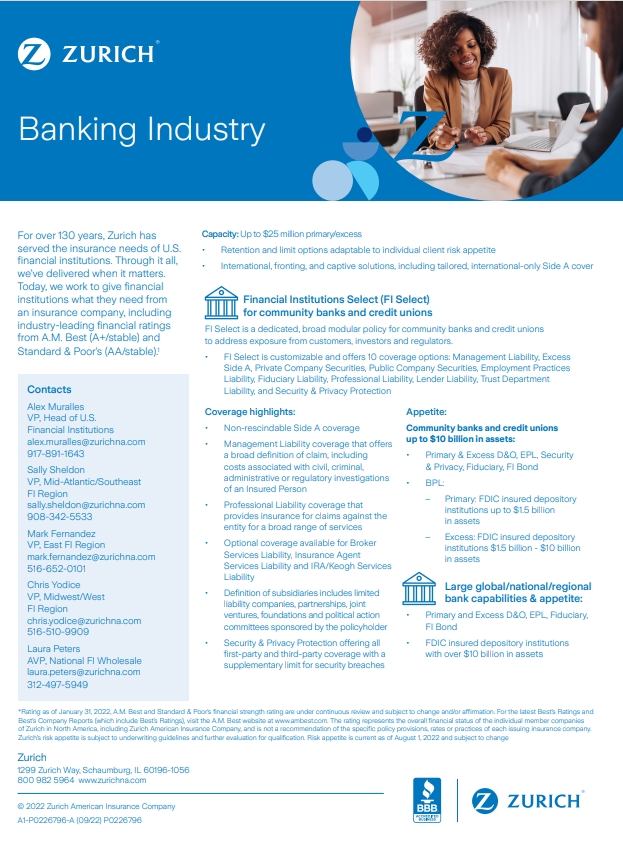
Financial Lines Insurance may include Management and Professional Liability. Depending on the policy and the organization’s risk profile, these coverages may address certain claims involving directors and officers, employment practices, fiduciary duties, professional errors or omissions, employee dishonesty or crime events
Professional Liability Insurance is commonly considered part of Financial Lines Insurance. It can help professionals and organizations respond to certain claims alleging negligence, errors, omissions or failure to perform professional services. It is separate from Management Liability Insurance, which focuses more on risks tied to governance, leadership decisions, employment practices and fiduciary responsibilities.
Traditional property and casualty insurance often focuses on property damage, bodily injury and physical assets. Financial Lines Insurance generally addresses certain allegations, liabilities and financial losses connected with management decisions, professional services, employment practices, fiduciary duties, employee dishonesty or crime events.
A wide range of organizations may benefit from Financial Lines Insurance, including private companies, public companies, nonprofit organizations and professional service firms. Businesses may consider these coverages if they face risks related to leadership decisions, client services, employee-related claims, fiduciary responsibilities, or other complex financial exposures.
Not necessarily. Financial Lines Insurance is an insurance-market term for a group of coverages addressing certain management, professional, employment, crime, fiduciary and cyber-related risks. “Financial insurance” is a broader, non-standardized phrase that may be used to describe other products. Businesses should review the name and terms of the specific policy rather than assuming the phrases are interchangeable.
No. The products grouped under Financial Lines can vary by insurer, industry and insurance market. Policy definitions, insured parties, limits, retentions, exclusions and available coverage features may also differ. Businesses and their brokers should compare the specific policy wording and program structure when evaluating Financial Lines solutions.