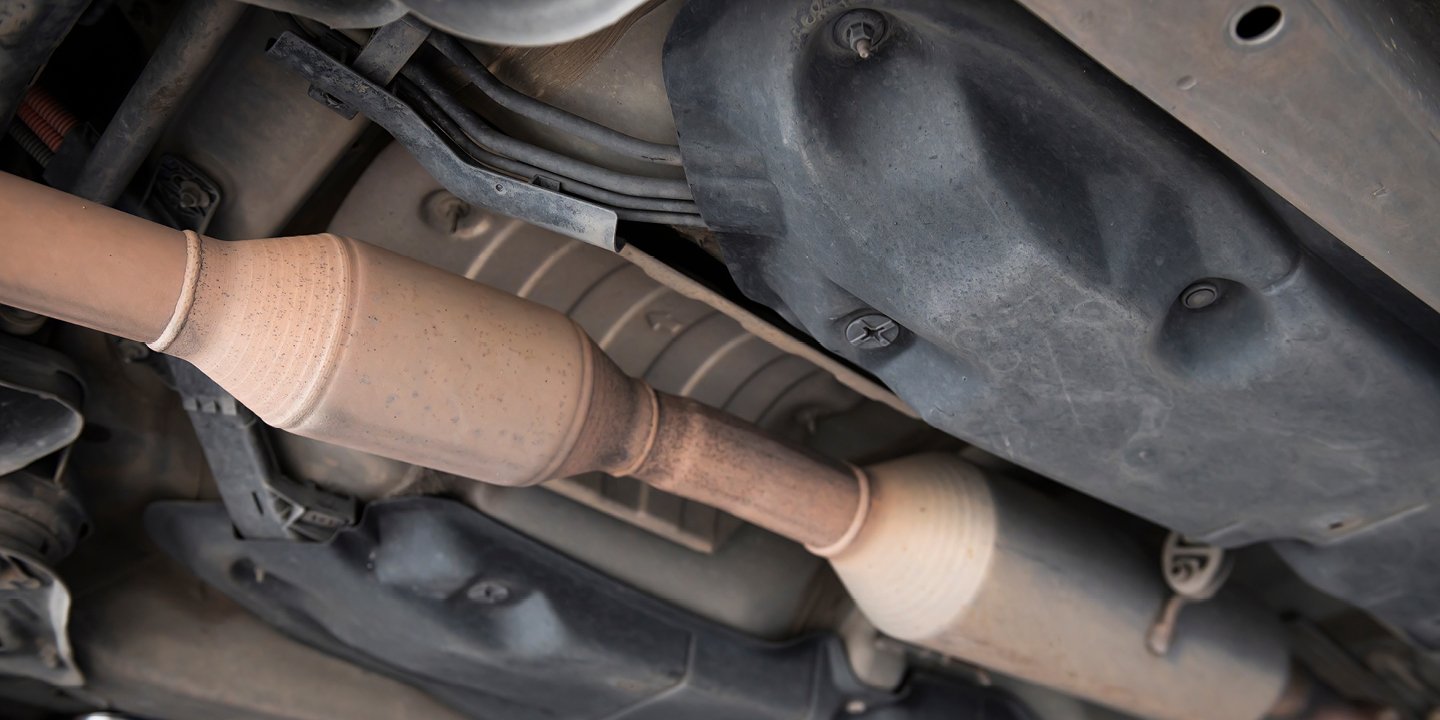
Catalytic converter theft: Gone in 30 seconds
AutomotiveArticleNovember 20, 2026
Due to the continued high price of precious metals, catalytic converter thefts continue to be a common crime that can be very costly to auto dealers and automotive service businesses if not addressed.
In addition, many insurance policies are carrying higher per-vehicle deductibles and higher per-occurrence deductible aggregates, which require the insured to reimburse the insurer up to an agreed upon amount annually before losses are paid by the insurer. Therefore, customers may end up paying the full cost of replacement until they meet their aggregate amount.
The good news is there are steps you can take to protect your business against this type of theft, which will be discussed later. First, let’s talk about why these crimes occur and who is committing them.
Why are catalytic converters targeted for theft?
More than 137,000 catalytic converters were stolen in 2025.1 Thieves are attracted to catalytic converters for two reasons: low risk and high reward. The ease with which a converter can be stolen presents few risks to thieves. Converters can be removed quickly — sometimes in as little as 30 seconds2 — with only a wrench or a reciprocating saw. And because thieves can work undetected under the vehicle, converters can be stolen in broad daylight.
In addition, thieves no longer have to steal an entire car for a nice payday. Catalytic converter theft can be linked to the high value of three precious metals found in most converters manufactured today: platinum, palladium and rhodium. Depending on which metal was used, thieves can sell converters to metal recyclers for anywhere from $50 to $1,400 per converter.2 Recyclers then extract the metal and resell it for thousands of dollars per ounce.
Targeted vehicles may include just about any pick-up truck or sport utility vehicle that sits high enough off the ground to allow an individual to slide under it without a jack. Particularly attractive to thieves are newer vehicles that have two converters.
Theft rings
While small-scale thefts are usually committed by individual thieves, most of the larger thefts targeting multiple vehicles at a single business appear to be committed by theft rings.
Theft rings often stake out businesses for security, guards, fences, location of vehicles, and lighting. Once thieves decide where and when to strike, they move in and may work in teams as small as two to as large as seven or more. A typical large team of thieves would consist of a couple of individuals under vehicles removing converters, a couple more waiting nearby to carry stolen converters to a waiting van or truck, and two or more waiting to load them onto the getaway vehicle.
Loss prevention tips
Catalytic converters are an easy and valuable target to thieves. However, by following sound loss prevention practices, businesses can minimize risk and save thousands of dollars in potential losses.
The preventive measures discussed below may ultimately be less expensive than paying insurance deductibles, nuisance expenses and escalating insurance premiums.
- Park vehicles in a well-lit area with a high volume of after-hours traffic.
- Park high-clearance vehicles in the most secure/visible sections of the lot.
- Place lower-clearance vehicles around high-target vehicles to reduce access.
- Eliminate use of off-premise lots to park vehicles unless security is present.
- Conduct after-hours perimeter inspections.
- Use intrusion alarms for fenced inventory storage areas.
- Inspect vehicle inventory regularly for attempted tampering and immediately investigate cut exhaust pipes or partial theft attempts.
- Implement detailed lock-up procedures for securing doors, gates and fences.
- Tack-weld catalytic converters onto the vehicle.
- Install aftermarket security products to shield the catalytic converter and protect it from being stolen. This can include etching VIN numbers onto converters and applying forensic markings where available.
- Hire security guards. Be sure to research security companies and select reliable companies with good references and a proven track record.
- Install a video surveillance system. Motion sensors and live monitoring are preferred.
- Establish procedures for reporting suspicious lot activity and unauthorized after-hours access.
To learn more about Zurich’s products and Risk Engineering services, click here, contact your Zurich representative, or call us at 1-800-840-8842 ext. 7449.
1. Olsen, Patrick. "Catalytic Converter Theft: 10 Most Targeted Vehicles." CARFAX. 10 June 2026.
2. Tourkow, Jodi, and Michael Cantu. "Catalytic Converter Theft: What You Need to Know." Edmunds. 14 May 2025.