Emerging risk: Storage and handling of EV batteries
AutomotiveArticleNovember 25, 2026
While the end of federal tax credits in September of 2025 slowed the market in the U.S., in the long term, electric vehicle (EV) adoption is expected to remain on an upward trajectory.
Looking ahead, S&P Global Mobility forecasts that EVs could represent 40% of total passenger car sales by 2030, with more optimistic projections suggesting over 50% market share between 2040 and 2045.1
As EV popularity grows and numbers rise, more and more of them will be visiting your service departments and landing on your pre-owned lots. Ultimately, the large-format EV batteries in these vehicles will need to be repaired or replaced, so dealerships must be prepared for their safe handling and storage. OEMs are the best source of information about EV battery repair, replacement, safe handling and storage. The purpose of this article is to provide high-level guidance to help you protect your buildings and property from fire, and share additional risk mitigation insights.
Handle EV batteries with care
The issue of electric battery safety, storage and repair is relatively new and is a continuously evolving risk for dealerships. Most full EVs are still "young" in vehicle years and their batteries are still strong and in good working order. However, as EV batteries age, more will fail prematurely, sustain damage in collisions, or simply wear out. Dealerships must be educated and prepared to move, handle and store them.
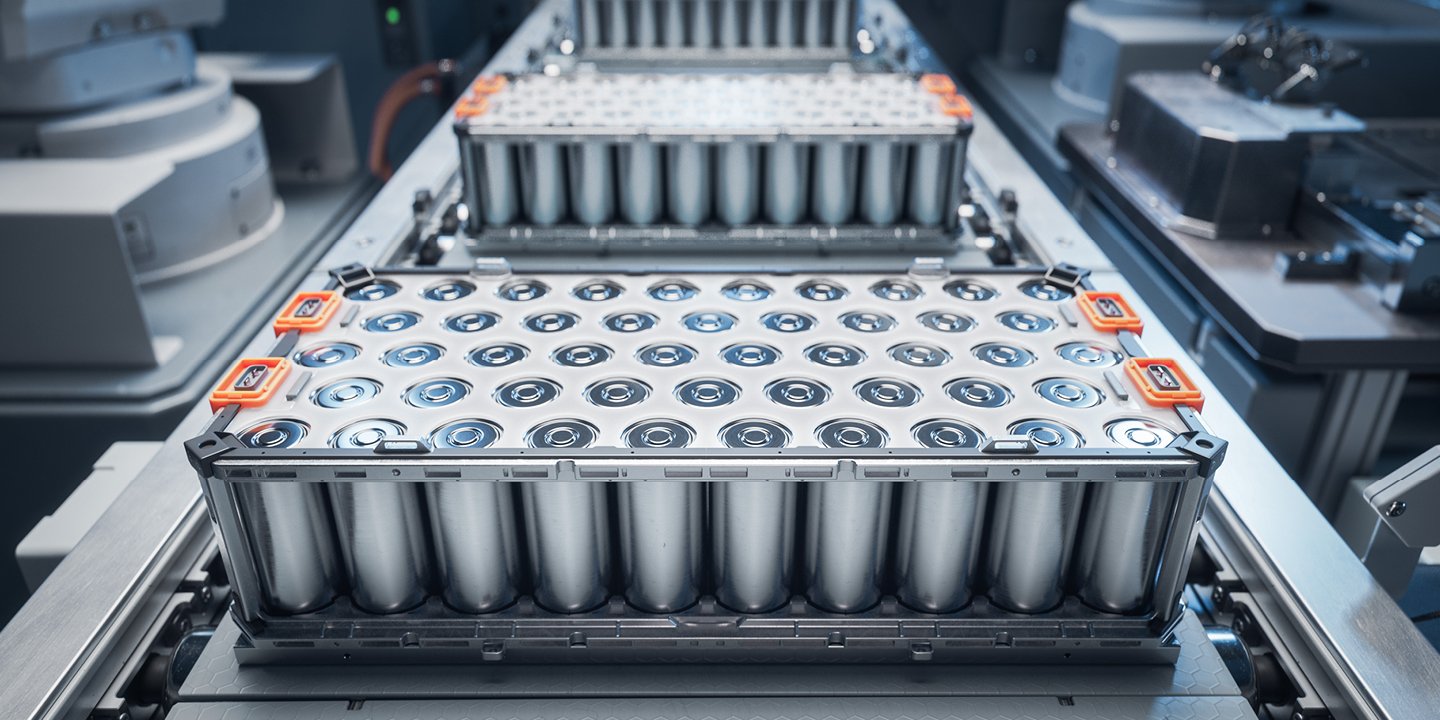
Large format lithium-ion batteries, such as those found in EVs, can weigh between 1,000 and 2,000 pounds. Heavy-duty equipment including jacks, lifts, forklifts and other OEM-specific accessory equipment will be needed to remove old batteries and install new ones. Moving them within your facility will take planning.
Assign specific service stalls where EVs can be worked on safely. These stalls should be somewhat isolated from high traffic and other areas where hazardous tasks — like welding, cutting, flammable liquid storage or transfer — are performed. EV work stalls and charging stations should be located close to overhead doors or exits to allow access by responding fire departments. Ideally, EV work stalls should be cut off with at least a 1-hour, fire-rated separation from other building occupancies to reduce the potential fire and smoke damage to other building areas.
Safe storage of EV batteries
Because EVs are in relatively early stages of adoption, receiving, storing and shipping EV batteries are not common practices for many dealerships. However, in the coming years, these activities are likely to become part of the dealerships' daily protocol. EV batteries will move in and out of the service department and parts and body shops. And since they are heavy and take up a great deal of space, the time to start planning for their storage is now.
Upon being accepted by the parts team, incoming batteries will need a holding place until they can be installed in a vehicle. Defective, depleted or damaged batteries will need a short-term storage area. Some situations may require long-term storage arrangements. Once a bad battery has been replaced, it is best to crate it up and ship it out the same day to avoid storing the battery overnight and exposing the dealership to a costly fire hazard.
Best practices are essentially the same for all storage situations:
- Avoid storing defective, damaged or depleted EV batteries.
- Return defective batteries to the OEM as quickly as possible, following their packing and shipping instructions.
- Move all EV battery storage out of and away from your primary facilities. The idea is to separate the fire hazard from high-value property. It is critical to protect your primary business assets (showroom, parts, service department and body shop) from loss.
- All garage, service and indoor charging areas should be equipped with automatic sprinkler systems that comply with current National Fire Protection Association (NFPA) standards.
- Extend sprinkler coverage to EV parking and charging zones, even though NFPA 13 does not yet mandate it.
- Consult with the OEM regarding lithium-ion battery storage practices. Store batteries at 60% or less charge level to reduce fire risk, based on Fire Safety Research Institute (FSRI) and NFPA testing.
- Maintain at least 10 m (33 ft) of separation between EV battery storage and charging areas, and any combustible materials.
- Locate EV work stalls near exits and isolate them with 1-hour fire-rated separations.
- Storage should be limited based on the design of the sprinkler system.
- Avoid extreme temperatures for the storage environment. Optimal temperatures should be maintained per OEM criteria, or between 59°F and 77°F.
- Install gas detection above stored batteries. Gases that are released can be hydrogen (H2), carbon monoxide (CO), carbon dioxide (CO2), methane (CH4), acetylene (C2H2), and hydrocarbons.
Increased hazard when EV batteries are wet
Flooded, damaged or compromised EV batteries represent an increased fire risk. A short circuit inside the battery can result in a discharge of energy and heat, which can lead to thermal runaway. When these batteries catch fire, they burn intensely hot and are much more difficult to extinguish than a traditional car fire. Assess your storage facilities for flood and water issues and use extreme caution.
If your facility is prone to flooding, especially in coastal areas where seawater may enter the building, be aware EV batteries can become extremely dangerous if immersed in water. FEMA has shared multiple stories about batteries catching fire following recent hurricanes and flooding in Florida.
The National Highway Traffic Safety Administration (NHTSA) offers the following guidance for flooded vehicles:
“The batteries in hybrid and electric vehicles are highly corrosive and should not be exposed to standing water. Flooded vehicles may have high voltage and short circuits that can shock and cause fires. Do not park a damaged vehicle with a lithium-ion battery in a garage or within 50 feet of your house or other structure, another vehicle or combustibles. If you suspect your battery has been damaged, contact your dealer.”2
Implement emergency protocols
Follow best-in-class industry standards from the Automotive Industry Action Group (AIAG) for battery classification, emergency response, PPE, hazard communication and training. Include emergency preparedness scenarios in your protocols, such as:
Support the local fire service in developing pre-planning that includes the following:
- Site plans that include the location of fire hydrants and hose connections.
- Inventory lists of Hazardous Materials, including EV batteries.
- Coordinate with the public fire service on the requirements for final extinguishment, especially for the removal of fire-damaged batteries or vehicles.
- Facilitate periodic follow-up site visits by responders, preferably annually, for familiarization and training.
- Implement early detection and suppression systems in battery storage environments connected to a monitored fire alarm system.
- Consider supplemental detection by a specialized flammable gas detector. This would detect flammable gas emissions most likely prior to the thermal runaway of a battery.
Disposal and recycling of EV batteries
Follow federal, state, local advisories, regulations, and industry standards such as the Automotive Industry Action Group (included under additional resources below) to adhere to environmentally responsible disposal and recycling practices.
The transition from fossil fuels to all-electric vehicles offers new challenges and unforeseen risks. Dealers should be in constant communication with their OEMs as new technology, policies and procedures emerge. Moving forward, cautiously, in this new environment is our best advice.
To learn more about Zurich’s products and Risk Engineering services, click here, contact your Zurich representative, or call us at 1-800-840-8842 ext. 7449.
Additional resources
Automotive Industry Action Group. “EV Battery Warehousing, Transportation, and Storage Handling”
Fire Protection Research Foundation. “Lithium Ion Batteries Hazard and Use Assessment - Phase III.”
National Fire Protection Association (NFPA). “Lithium-Ion Battery Safety.”
U.S. Bureau of Labor Statistics. “Charging into the future: The transition to electric vehicles.”
1. Adam, Ali. “A Revolutionary Road.” S&P Global Mobility. May 18, 2023.
2. National Highway Traffic Safety Administration (NHTSA). “Hurricane- and Flood-Damaged Vehicles: What You Need to Know.” Accessed September 4, 2025.