New automotive tech is altering parking garage fire risk
PropertyArticleNovember 2, 2026
Historically, parking garages have been perceived as being on the fringes of commercial property fire risk. Even when adjacent to structures involved in a fire, parking garages were rarely central to the action. Vehicles in proximity might be damaged, but parking lots and garages themselves were generally not the central focus of major commercial property losses.
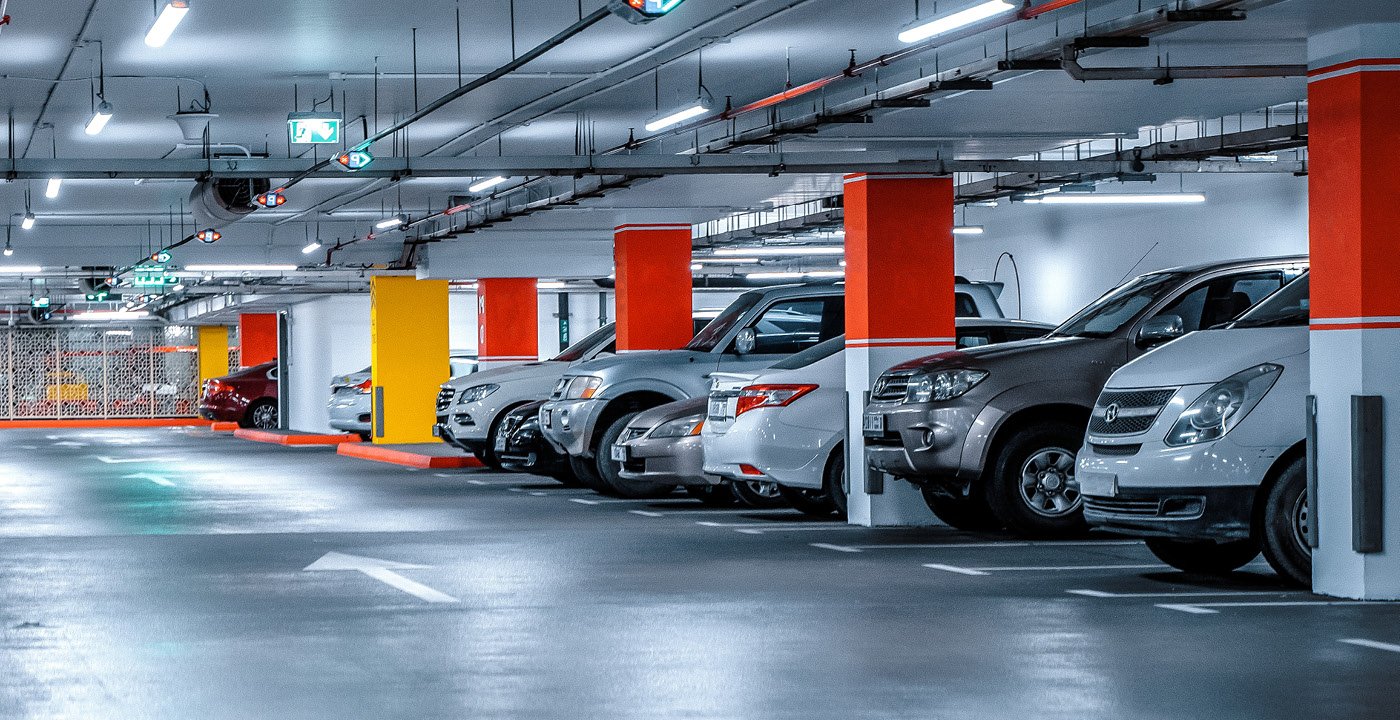
Today, rapidly expanding automotive and alternative energy technologies are changing the game – and the risk profiles – for parking garages, especially highly concentrated, multi-level facilities serving a growing mix of internal-combustion engine (ICE) and electric vehicles (EV) parked together in tight, often enclosed spaces. Examples of high-intensity, fast-spreading, hard-to-extinguish fires in parking garages have drawn increasing attention to garage fire-suppression strategies. And the evolving characteristics of modern cars incorporating more plastics and electronics than ever before, combined with the growing presence of charging stations, solar power generation and battery storage equipment in many modern parking facilities, are earning increased scrutiny by fire protection organizations, risk managers and underwriters.
While fires in large parking garages remain relatively infrequent, the changing characteristics of modern vehicles may be more likely to cause rapid spread from vehicle to vehicle, generating dense, toxic smoke, and high heat that can complicate firefighting efforts and cause severe economic losses.
A November 2018 parking garage fire at the Liverpool Echo Arena in Liverpool, England, destroyed more than 1,000 vehicles and resulted in the ultimate demolition of the structure.1 A garage fire started by an electrical fault in a diesel vehicle at Oslo, Norway’s Stavenger Airport in 2020 destroyed more than 600 vehicles.2 An August 2024 fire triggered by the explosion of an EV battery in the underground parking garage of a South Korean apartment complex destroyed 140 vehicles and left 23 people suffering from smoke inhalation.3 It took firefighters eight hours to suppress the blaze.
These fires have amplified attention on how modern vehicles and parking structures — including automated car stackers coming online in congested metropolitan areas — may require a reclassification of fire hazard levels in parking garages and modifications to fire risk management tactics.
“This is an emerging risk we’re focused on,” said Bill Ingram, Vice President of Technical Operations for Zurich Resilience Solutions. “At this point there’s limited loss history and limited test data replicating modern vehicles and modern environmental conditions, so there’s some debate and variation over risk management approaches. But there’s not a debate that intense fires are happening. We continue to see that this risk is real.”
What are the causes of major parking garage fires?
The fire risk profile associated with modern vehicles has changed in some notable ways. One of the biggest hazards may not be the first that comes to mind. It’s the fact that modern cars of all types have more plastic components than in the past, partly to reduce weight and to enhance fuel efficiency as legal regulations evolve.
In 2021, plastics accounted for approximately 411 pounds of the average vehicle’s total weight — about 9.6% — compared with less than 3% in the 1970s, according to the National Fire Protection Association (NFPA).4 A more recent estimate by the American Chemistry Council suggests 428 pounds of plastics and polymer composites per vehicle in 2025, representing an 18% increase over the last decade. It is estimated that 50% of a car by volume is now plastic.5 The increase in plastic is driven by the desire to reduce vehicle weight as well as plastics in the incorporation of new vehicle safety systems and EV/autonomous‑vehicle technology.
This higher plastic content has the potential to heighten the combustible energy in a fire by providing a significant reservoir of highly flammable material, potentially leading to higher heat release rates, longer burning durations and greater risk of fire spread in parking garages compared to older vehicles, according to the NFPA.
EV and ICE vehicles share fire risks
Both EVs and ICE vehicles present fire risks. The causes in EVs may be a short circuit, a puncture, overheating, overcharging or over-discharging, while in ICE vehicles causes may be fuel or oil leaks, overheating, worn-out parts or loose electrical components.
While reports of EV and lithium-ion battery fires have spawned headlines and media airtime, UL’s Fire Safety Research Institute reported in August 2026 that EV and ICE vehicle fires had similar fire growth rates, peak fire sizes and fire durations in full-scale free-burn experiments.6 But EVs were shown to release more total energy on average, which researchers attributed to greater vehicle mass and higher concentrations of plastics, as well as the higher temperatures typical of lithium-ion battery fires.
“When you combine lithium-ion batteries and plastic,” Ingram said, “fires have the potential to cause greater damage, jumping to other vehicles very rapidly. The fire can burn so hot or for so long, or both, that it can potentially impair the concrete and rebar structure of the garage. That can potentially increase the risk of collapse."
No matter how a fire starts, enclosed, underground garages can complicate both fire response and recovery. In an open-air garage, more of the heat can escape in a fire, Ingram said. But a fire is typically more intense and tougher to extinguish when it’s in an enclosed parking structure or below ground. Even after it’s extinguished, if there are businesses or residences above the garage, “you can’t just lift the building above it out of the way to rebuild the garage. Because of that, you can see total losses and significant costs as a result of a fire,” Ingram said.
Reignition potential is also higher for EV fires than for ICE fires, the NFPA says. It recommends that, after a fire, EVs be towed and placed 50 feet away from surrounding structures due to that reignition risk.
The underwriter’s view
Stephen Penwright, Head of Underwriting for Zurich U.S., said evolving risks in parking garages are driving up loss expectancies, which can in turn affect the insurance capacity that carriers are willing to deploy.
“If the parking garage is separated from the main building or asset, the risk is sometimes more manageable,” Penwright said. “But the situation becomes particularly concerning when a garage is connected to or below the main building. When you think of a parking garage fire, you may not think of business interruption loss, but it’s a very real possibility if the parking structure is connected to a business, where ingress and egress may be impeded in the event of a fire.”
Smoke generated from lithium-ion batteries can also require special treatments to clean up before the usual occupants can return.
What can be done to mitigate garage fire risks?
Evolving fire dynamics have prompted revisions and debate over the fire hazard classification applied to parking garages. The intersection of an increasing number of variables is influencing development of new recommendations to mitigate the risk.
“There wasn’t a big push to sprinkler garages in the recent past, because it wasn’t where perceived risks were,” Penwright said. “That’s evolving, with growing awareness of loss exposures that used to be inside the building, such as at a casino or hospital, now moving to outside the building, which we used to view as fairly benign.”
In the past two years, the NFPA has elevated the fire hazard classification for parking structures and has called for sprinklers to be installed in all new parking structures, regardless of size, whether open air or closed.7 (The revision doesn’t apply to existing garages.) The NFPA also has adjusted some of its recommendations for sprinkler density.
Other organizations are making similar adjustments. The International Building Code in 2021 added a requirement for sprinklers in all new open parking garages over 55 feet in height or with over 48,000 square feet of fire area.8
Recommendations will continue to develop and evolve, Ingram and Penwright said. Some insurance providers consider the fire hazard to be a level above even the updated classification from the NFPA, which is working on more testing and research replicating modern scenarios.
“Existing data indicates that sprinklers can control fires and limit them to the initial vehicle, though the optimal design density is still unknown,” said the NFPA.9 “More research is needed to properly design sprinkler systems to prevent vehicle-to-vehicle fire spread in parking garages.”
Data is particularly scarce for automated garages that involve stacker structures with multiple tiers of cars stacked close to each other. These are increasingly common in urban centers where parking space is at a premium. Similar concerns have been discussed regarding “too tall, too dense” warehouse storage.
For risk managers and underwriters, a useful perspective is to view modern parking garages as the convergence of several exposures concentrated in one location:
- Enhanced fire potential of large quantities of plastics
- The presence of lithium-ion batteries in EVs
- EV charging infrastructure
- Solar power generation technology, including rooftop photovoltaics
- Enclosed or underground structures that can concentrate toxic gases
- Occupied buildings above or adjacent to garages
For risk managers, the issue is not one technology in isolation, but how these systems interact with the structure, fire protection, emergency response planning and business continuity.
Are more sprinklers the answer?
While installing sprinklers can represent a cost for businesses, Zurich regards them as an important risk-mitigation measure, given the severity of damage that parking garage fires have caused. Ingram said Zurich Resilience Solutions currently recommends installing sprinklers in parking garages on any level that has a roof above it, even if the structure has walls that are open to the outside air.
Fire risk is particularly concerning in certain industries such as auto manufacturing and auto dealerships that service vehicles.
Zurich offers property and casualty insurance to auto dealers and shares information on the risks associated with EV batteries and cautionary steps to reduce fire risk to their dealerships. These steps include immediately returning defective, damaged or spent EV batteries to the manufacturer and parking damaged EVs that are equipped with lithium-ion batteries at least 50 feet from structures, other vehicles or any combustible materials. This is in part because of the potential for a damaged or defective battery module to deteriorate at an unpredictable time, progress to ignition and then a fire.
After the headline-making fire in South Korea, officials there announced they would impose a rule capping charging of electric vehicles to 90 percent inside garages. It’s an effort to address one potential fire risk: overcharging.
As technology and design arrangements evolve rapidly, Ingram expects more businesses, insurance carriers and other stakeholders to engage in what he describes as “extrapolated engineering.”
“Fire protection specialists will draw from what is known about similar risk scenarios and then design protection systems that should control an evolving fire threat,” Ingram said. “However, until testing of the protection schemes in the actual environment intended for use is completed; the viability of the control is not 100%. It’s about identifying exposures and managing them to the best of our ability. Protection is in everyone’s interest.”
References:
1. Hurst, Pat. “Liverpool car park fire: ‘Sprinklers could have stopped’ blaze that destroyed 1,600 vehicles.” 2 January 2018.
2. Bergland, Nina. “Airport garage fire started in diesel.” Norway’s News in English. 8 January 2020.
3. Dong-young, Kim. “EV fire in Korea sparks safety concerns, prompts industry, government action.” AJP Asia First News Agency. 2 September 2024.
4. Hutchison-Lutz, Victoria. “Research Insights: Fire Safety for Electric Vehicles and Other Modern Vehicles in Parking Structures.” National Fire Protection Association (NFPA.) 12 July 2024.
5. Plastics and Chemistry in Automobiles. American Chemistry Council. August 2026
6. Barowy, Adam M.; Sauer, Nathaniel G.; Vogt, Christian A. Full-Scale Vehicle Fire Experiments and Recommendations for Fire Incident Response. Fire Safety Research Institute, UL Research Institutes. 4 August 2026.
7. Hopkins, Terry. Did You Know? Fire Sprinklers in Open Parking Garages - National Fire Sprinkler Association National Fire Sprinkler Association. 30 April 2024.
8. Ibid.
9. Hutchison-Lutz, Victoria. “Research Insights: Fire Safety for Electric Vehicles and Other Modern Vehicles in Parking Structures.” National Fire Protection Association (NFPA.) 12 July 2024.