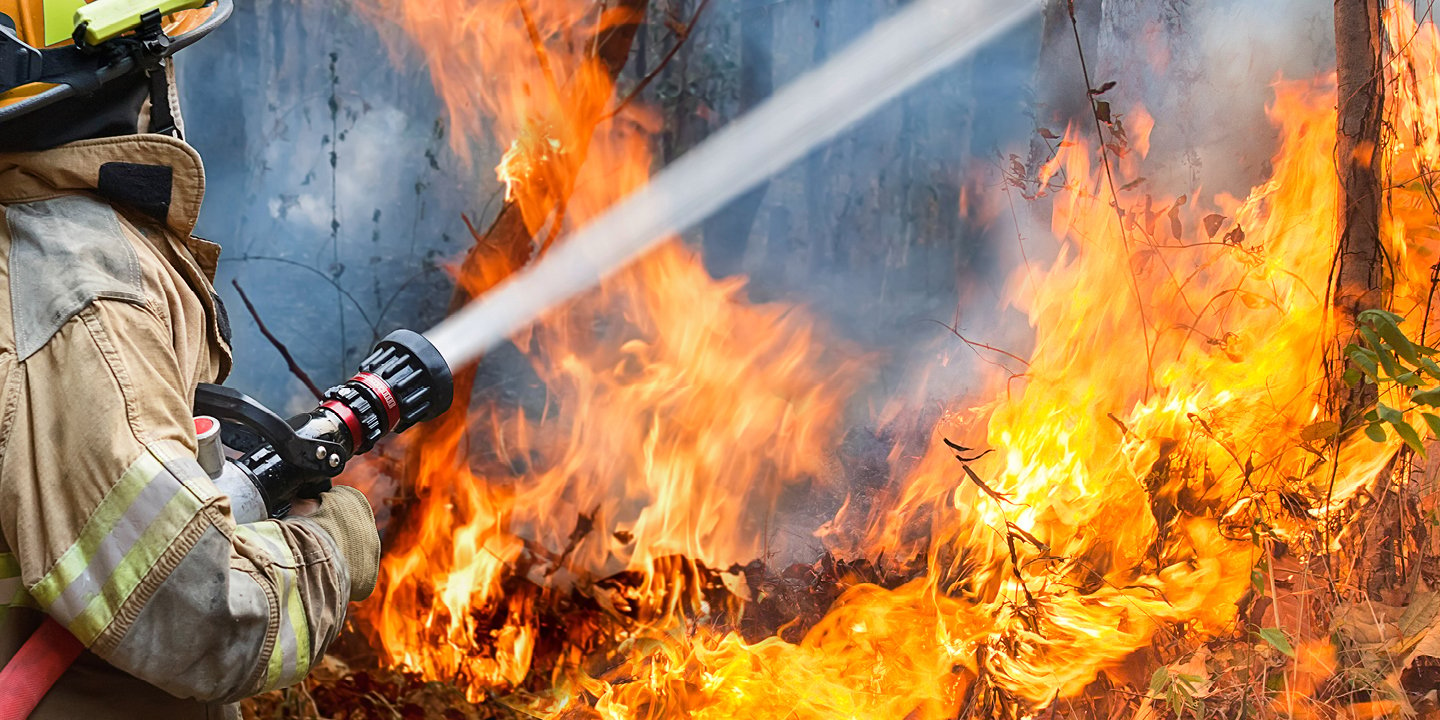
Wildfire inventory protection for auto dealerships
AutomotiveClimate and EnergyNatural HazardsWildfireArticleNovember 12, 2026
Severe wildfires have more than doubled over two decades1 and auto dealerships face unique associated risks due to large outdoor inventories, open lot layouts, and high-value vehicles stored in close proximity.
While certain states are more susceptible to fires, dry conditions and high winds can create fire risks in any region in the U.S. And even dealerships not in high wildfire hazard zones can have their businesses significantly affected by embers, smoke and wind-driven fire from wildfire events in other areas.
Zurich has previously developed wildfire resources for auto dealerships and other businesses (see some below), including workforce emergency response actions. This document specifically focuses on dealership inventory and is intended to help improve preparedness, reduce wildfire-related loss potential and protect vehicle inventory during heightened wildfire conditions.
Key wildfire exposures for auto dealerships
- Outdoor vehicle inventory with limited physical separation or fire barriers
- Wind-driven embers igniting vehicles, landscaping, fencing or exterior building components
- Modern vehicle construction, which includes plastics, polymers, tires and wiring that ignite more readily than older metal-dominant vehicles
- Chain reaction fire spread, where radiant heat from one burning vehicle ignites adjacent vehicles in tightly parked rows
- Electric and hybrid vehicles, which may burn at higher temperatures and present challenges if damaged
- Smoke and ash contamination affecting vehicle finishes, interiors, electronics and HVAC systems
- Operational disruption, including evacuations, power outages, and delayed emergency response during regional wildfire events
Given the exposures noted above, effective preparedness requires dealerships to consider risks across their property, inventory and the physical environment surrounding the dealership.
Defensible space and site maintenance
Within the area surrounding your property, prevention measures should focus on creating defensible space — a buffer zone to reduce fire spread from surrounding wildlands to your dealership’s property.
Here are five actions dealerships can take to establish the buffer zone — one that can make the difference between a fire threat and a fire disaster:
- Remove dry vegetation, brush and combustible debris from the dealership perimeter.
- Replace combustible landscaping (e.g., mulch or wood chips) with non-combustible materials such as gravel or stone, especially in inventory areas.
- Maintain 3–5 feet of non-combustible clearance around buildings.
- Trim trees so branches are 6–10 feet above ground and clear of roofs and vehicle parking areas.
- Keep roofs, gutters and paved areas free of leaves, pine needles and debris.
Slowing fire spread between vehicles
While wildfire guidance often focuses on buildings, the same principles apply to vehicle storage areas. Reducing ignition opportunities and limiting vehicle-to-vehicle fire spread can be accomplished through these steps:
Increase spacing between vehicles
- Increase spacing between rows of vehicles where practical, especially during Red Flag Warnings or elevated wildfire conditions.
- Expand aisle widths to reduce radiant heat transfer.
- Prioritize additional spacing for EVs, hybrids, and high-value new inventory.
Remove combustible materials under and around vehicles
- Eliminate mulch, weeds and dry vegetation beneath and between parked vehicles.
- Replace landscaped islands within inventory areas with gravel or rock.
- Routinely inspect areas beneath bumpers and wheel wells for debris buildup.
Break up continuous fuel paths
- Avoid tightly packed, bumper-to-bumper parking patterns when wildfire risk is elevated.
- Use staggered parking configurations to interrupt heat transfer.
- Keep trash bins, cardboard, pallets, plastic wrap and service materials away from inventory rows.
Maintain a “lean, clean and green” lot
- Perform lot cleanups regularly during wildfire season.
- Remove leaves, pine needles and debris from curbs, fence lines and paved surfaces.
- Pay special attention to tire lines and low areas where embers may accumulate.
Eliminate adjacent ignition sources
- Avoid parking vehicles directly against wooden fences or combustible barriers.
- Replace wooden fencing near inventory areas with non-combustible materials where feasible.
- Maintain a 3–5-foot non-combustible buffer between vehicles and fences, buildings, or stored materials.
Electric Vehicle (EV) considerations
- Avoid charging EVs during Red Flag Warnings or active wildfire conditions.
- Maintain EV battery charge levels between 20% and 80% to support rapid relocation if needed.
- Store charging cables neatly and away from evacuation routes.
- Park EVs in the most open areas of the lot, with increased spacing when possible.
Operational preparedness
Wildfire response planning
- Maintain a written wildfire or evacuation plan addressing employee safety and customer communication, as well as inventory protection.
- Assign responsibility for monitoring local wildfire alerts and weather conditions.
- Identify vendors for towing, vehicle relocation, and post-event cleanup in advance.
Inventory and key management
- Maintain an up-to-date digital inventory list accessible off-site.
- Store keys in centralized, clearly identified locations for rapid access.
- Establish priorities for relocating vehicles if conditions require it.
Power and data protection
- Evaluate backup power options to support gates, lighting, security and key control.
- Ensure critical sales, service and title records are stored in secure, cloud-based systems.
Smoke, ash and post-event actions
- Close building doors and limit HVAC intake during heavy smoke conditions.
- Increase HVAC filter inspections and replacements during wildfire season.
- After a smoke or wildfire event:
- Document vehicle conditions with photographs.
- Inspect for ash contamination, odor intrusion and air-intake exposure.
- Promptly wash and detail vehicles, as ash can be corrosive if left on surfaces.
- Inspect rooftop HVAC equipment and mechanical systems for ash accumulation.
Wildfire preparedness is most effective when addressed before conditions escalate. Many of the measures outlined above are low-cost, operationally practical, and can significantly reduce loss severity while improving safety for employees and customers.
The Risk Engineers of Zurich Resilience Solutions are available to discuss site-specific recommendations or help prioritize actions based on local wildfire exposure.
To learn more about Zurich’s products and Risk Engineering services, click here, contact your Zurich representative, or call us at 1-800-840-8842 ext. 7449.
Additional resources
Wildfire Preparedness Checklist for Auto Dealerships
Zurich North America Wildfire Resource Hub
U.S. Department of Homeland Security – Wildfires
National Fire Protection Association (NFPA) − Wildfire preparedness
1. NASA Science. “Wildfires and Climate Change.” NASA Science. NASA, 14 May 2026.