Billion-dollar questions in the data center buildout
PropertyTechnology and AIClimate and EnergyConvective stormPodcastMay 20, 2026
Record date: 4/10/26
Air date: 5/20/26
This episode of Future of Risk is the first in Zurich U.S.’s data center podcast miniseries, where we look at the risk management challenges posed by the rapid expansion of data centers fueled by AI, cloud computing and digital transformation. Our host for this miniseries is Matt Wagner, a Regional Vice President with Zurich’s Construction business. For the kickoff episode, Wagner speaks with Tobias Cushing, U.S. Head of Construction, and Stephen Penwright, Head of Underwriting for U.S. National Accounts, about how hyperscale data centers are blurring the lines between construction and operations and how these billion dollar projects are integrating onsite power generation and testing the limits of insurance capacity. Cushing and Penwright highlight how data centers can remain a strong, insurable risk by building in resiliency, redundancy and safety from design through operations. This episode provides essential insights for risk managers, construction leaders, insurers and business decision makers navigating the expanding data center economy.
Guests:
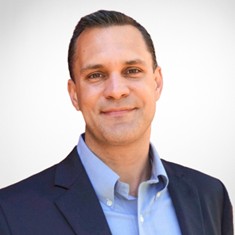
Tobias Cushing
U.S. Head of Construction
Zurich
Connect on LinkedIn
Tobias Cushing is the Head of Construction at Zurich U.S. He is responsible for managing the Construction underwriting teams and portfolio, including Construction Property, Casualty, Professional, Environmental and Excess. He is accountable for furthering Zurich’s dedication to safety, policyholder experience and innovation in the insurance industry. He is responsible for financial results and underwriting quality, portfolio management, finances and broker relationships.
Tobias joined Zurich in 2022 as the Head of Construction Casualty and most recently served as Deputy Chief Underwriting Officer for Zurich North America. Prior to Zurich, he held various underwriting leadership positions at The Hartford, including Head of Construction, in house Counsel and Large Loss Claims Adjuster. He began his career as an Insurance Coverage Litigator in private practice. Tobias serves on the Board of Directors of Lawyers for Children America and is a pro bono attorney representing children in abuse and neglect cases. Toby holds a Bachelor of Science in Biology from Houghton College, a Juris Doctor from Quinnipiac University School of Law and a Master of Insurance Law from the University of Connecticut School of Law.
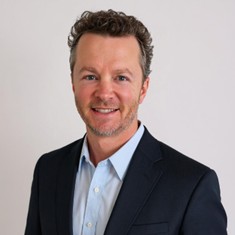
Steve Penwright
Head of Underwriting for U.S. National Accounts
Zurich
Connect on LinkedIn
Steve Penwright is the Head of Underwriting for U.S. National Accounts. In this role, Steve is responsible for the technical underwriting aspects of U.S. National Accounts, including defining the underwriting strategy, managing portfolio insights and making transactional pricing and reinsurance decisions. He and his team will also be responsible for underwriting quality control, single parent captives and business unit actuaries in collaboration with the central Technical Underwriting team.
Since joining Zurich in 2006 as an enterprise associate before taking a business analyst role in 2007, Steve has held several underwriting positions in Large Property since joining the team in 2009. This includes his most recent role as the Technical Director for Property’s Portfolio Management team, a position he’s held since 2022. Steve is a graduate of Indiana State University with a Bachelor of Science in Insurance & Risk Management.
Host:
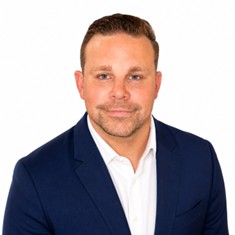
Matt Wagner
Regional Vice President of Construction Property for East Region
Zurich
Connect on LinkedIn
Matt Wagner is Regional Vice President of Construction Property for the East Region. He is responsible for delivering profitable results, managing broker relations, developing talent and executing on Construction Property strategies for the East region. In addition, Matt serves as the Construction Excess and Surplus Distribution Leader. In this role, he manages Construction’s national E&S market-facing initiatives, strengthening key wholesale relationships and creating strategies to drive profitable growth.
(PLEASE NOTE: This is an edited podcast transcript, capturing speakers with natural speech patterns that may include incomplete sentences and/or asides, grammatical errors, verbal shorthand and some statements that may be less clear in print.)
EPISODE TRANSCRIPT:
TOBY CUSHING:
We don't see the hyperscalers slowing down in the next three years. We see them accelerating towards '28.
MATT WAGNER:
Welcome to Future of Risk presented by Zurich U.S. We explore the changing risk and resilience landscape and share insights on the challenges that face businesses to help you meet tomorrow prepared.
We're kicking off our Data Centers podcast miniseries by looking at how insurers, contractors and owners are collaborating to deliver on the unprecedented demand for data centers to support rapid AI adoption. I'm your host, Matt Wagner, Regional Vice President of Construction Property for the East region. And today I'm speaking with Toby Cushing, U.S. Head of Construction at Zurich, and Steve Penwright, Head of Underwriting for U.S. National Accounts at Zurich. Toby, and Steve, welcome to the podcast.
STEVE PENWRIGHT:
Thanks, Matt. Happy to be here.
Why data center construction is growing faster than any sector
WAGNER:
I’d love to just dive right in and talk about some burning questions that I think our audience is really keen on. And I want to talk about the big picture with data centers—and it is a very big picture, no pun intended. But just in your careers, have either of you seen a cycle of growth like the one with data centers thus far to date? Toby, let’s start with you from the construction perspective and then Steve, with you from the property perspective.
CUSHING:
From a construction perspective, we look at construction from a GDP (gross domestic product) perspective as being a very significant part of the economy. So, if we have about a $35 trillion-a-year economy, about $2.2 trillion of that is construction spending. And of that $2.2 trillion of construction that’s kind of in flight every month in the U.S., data centers are not a huge part of that, right? They typically have ramped up to being about $4 billion per month. But not too long ago, we were only seeing maybe a few billion dollars per year of data center construction.
And, and now we’re seeing $40 billion, potentially over $100 billion, of data center construction happening over the next few years. We have some policyholders and clients who are looking to, just over the next three years in ’26, ’27, ’28, start $20 billion, $45 billion and $95 billion of data centers, for example. So, you’ve got multiple hyperscalers and multiple data center companies that have quadrupled their data center building over the last five years. So, the raw amount of the construction economy—it’s still only about 5-10% of the economy, even as it’s growing up, from a construction economy perspective—but the rapid growth is just amazing and we’ve really never seen something grow that quick. The size of the data centers has also grown very much over the last three to five years.
In particular, our average data center size just a few years ago was $100 million, $250 million. Now, the average data center that’s being submitted to us to provide builders risk insurance or casualty insurance is over $500 million. And of course, you have many of them that are over $10 billion—some of them are doing up to $20 billion of data centers in one site. And that’s particularly important for Stephen’s world, because if you have a bunch of data centers under construction in one area, there’s usually a bunch of data centers in that area, like Sterling, Virginia, or Abilene, [Texas], we might only be insuring one data center in a location, but when you add that one data center to the nine that are already there, it can present a lot of concentration concerns—not only for us from a builders risk perspective, but also from a fixed property [perspective]. But we have been able to provide capacity and deal with those issues. Still, it’s growing so quick and it’s also growing so quickly in some very concentrated areas around the U.S. that it’s introducing new dynamics we’ve never seen before.
How hyperscale data centers are redefining power and infrastructure needs
WAGNER:
Steve, I’d love your perspective on this in one moment, but one thing that I want to just kind of focus in on is, we’re talking about rapid scale and when I see rapid scale on just the dollar sizes to build a data center—now the billions-of-dollar threshold framework, which seems and sounds like it’s kind of becoming just commonplace—doesn’t that also drive just a ton of need for power and other infrastructure to help support this? Like, what does that look like from your lens within construction?
CUSHING:
If we’re seeing about $4 billion per month of data center building in the U.S. being put in place, we’re seeing about $9 billion of power generation being put in place. So, power gen is spending more per month, from our perspective, on construction. And this is the actual generation plants, not the utility lines or transmission lines. But it’s still not keeping up with it, because you’ve got other parts of the economy besides data centers, like EVs and manufacturing, that are also increasing their power pull. So, I would just say we are finding ways to have enough right now, but that power gen spend is going to go up, probably more slowly, not as hyperbolically.
WAGNER:
Yeah, it sounds like it’s just completely driving a new wave of power spend that power companies—and even new entrants—haven’t even seen in years prior where they’re trying to keep up with the pace and scale of some of these data centers. It’s really interesting. Steve, I’d love to transition over to you. Have you seen anything like this in your career? And what’s your experience like on the property side?
PENWRIGHT:
Yeah, from an operational property perspective, I don’t think we’ve seen anything quite like this. You can’t turn on the news today without seeing the term hyperscaler. And so, to level set, that basically means a massive cloud service provider that offers infrastructure as a service. And the cap-ex spending for these hyperscalers for 2026 alone is estimated to be at $700 billion, when 10 years ago it was just $31 billion. And so, the way we think of it is, whether you are in the data center business or not, you are exposed to data centers, whether it’s your payment system, your HR systems, your point of sale or inventory systems—they all depend on servers that you may or may not see. And at the end of the day, if there’s an outage, you and your customers are going to feel it. But to level set again, the way from an operational property standpoint we look at it, there’s four types of data centers:
- Enterprise data centers, which basically means you build, own and operate. And so, we tend to see these data centers with healthcare institutions, credit card processing systems, because they tend to be more secure.
- Managed service data centers—our provider runs it for you. You lease dedicated equipment and outsource the management and monitoring of that data center. So, think Accenture, Rackspace, Infosys.
- Co-locations—you rent space in someone else’s building, but you bring your own gear. Think big providers in that space are Equinix and Digital Realty.
- And then finally, cloud, which is akin to a hyperscaler and that’s an off-premise data center that’s hosted by a provider like Amazon, Microsoft, Azure or Google Cloud.
In the operational property space, we like to think of this as the fourth industrial revolution. In the 1700s was the first, with the steam engine. About a hundred years later came electricity and electric motors. About a hundred years later, the microcomputers, microelectronics. And fast forward 70 years ago came and now we are at the artificial intelligence crossroads. To summarize: This is something we have not seen before.
Why bringing power to the site matters
WAGNER:
Steve, when I listened to you say that, I think and hear the word “velocity”—like there’s just so much velocity that’s going on with this, from construction through to operational and how it touches so many different aspects of the economy and our daily lives that sometimes we don’t even pay attention to. I think that this kind of begs a natural question, but for our audience, how long do you think that this growth will continue on for? Can it continue to scale the way that it has for as long as it has? What does that look like from your perspective?
PENWRIGHT:
You know, it's a really good question. I think there are limiting factors. Listen, again, I think this is the largest growth potential we've seen in this space. But with that said, there are limiting factors around power, being one which Toby referenced. But the lead time to get your gas turbines is several years. At the State of the Union the president referenced that these hyperscalers need to bring their own power with them, that connecting to the grid isn't going to be an option for community reasons of increasing energy costs. And the reality is, connecting to the grid, even when that is and was an option, is a multi-year process. And that's where you've seen investors invest in old brownfield manufacturing sites, steel sites that had these connections to the grid, as a fast track to get access to power.
I think labor is also going to be a limiting factor. There is some resistance in certain communities around data centers. They’re tending to be in more rural areas where there’s access to land and power and setting up healthcare, setting up restaurants—these are towns that need to be built to support the amount of construction that’s taking place in these areas that are not used to that. So, while I want to say it’s going to continue indefinitely, I’m a realist and recognize there are limiting factors. And Toby, I’m sure, has some opinions on those as well in relation to quality and how fast these things are being built.
WAGNER:
Absolutely. Steve, really, really good points. Toby, from a construction lens, I mean, let's dial in a little bit more into that labor perspective, but I have to imagine that these sites are requiring hundreds if not thousands of workers at any one time. Can you expand upon that a little bit and just talk to us about the construction labor workforce that's needed for the scale of some of these projects?
CUSHING:
The way we look at our policyholders’ business many times is, we’re looking at what they’re planning over the next three years. So, we have very good insight into our policyholders’—what the contractors would call—pipelines, or our owners’ pipelines, of building. And we don’t see the hyperscalers slowing down in the next three years. We see them accelerating towards ’28.
’28 could be a peak, but I don’t have a good view into ’29 and ’30 because they’re not forecasting that yet. So, if we look at maybe having somewhere between $50- $150 billion of data centers over the next year, that number’s definitely going to go up.
There are things that can slow that down, though. Because again, these are policyholders’ estimates of what they’ll do and I think Stephen’s 100% right—power could slow them down. And we’ve seen some political churn around that. We definitely have seen policyholders explore things like co-located power plants that they build themselves and not waiting for the utility to build more power, but they’re also willing, in some instances, to fund or help fund the utility building more power. But then you also have some policyholders’ own ethos or ethics have them shooting to be carbon neutral. And you have some people even talking about doing carbon capture or offsets with green generation of power, like solar and wind. So, even though it’s not co-located, they’re putting green power into the grid to help offset the power that they’re generating off of fossil fuel-burning stuff.
The workers—I think they will find the workers as they need. Sounds a little strange, but with a three-year pipeline, the electrical contractors have been able to keep up and the HVAC contractors have been able to keep up because they really do know that they have three years of work coming. So, they’re really willing to invest in development and onboarding of those workers. Residential construction has been down, too. So, I think you’re getting some skilled workers from HVAC and electrical and concrete able to come over into that space. If infrastructure, street and road picks up, energy picks up or residential construction picks up again, that could cause a constraint on supply of workers in the U.S. So, I feel pretty good about there being enough workers.
Can data centers be insured at full value?
WAGNER:
Let’s come back to that power piece in a couple moments, because that’s actually very interesting. But in addition to just some of the factors that both you and Steve mentioned, we hear about insurance capacity being a potential limitation, with a lot more third-party financing entering these projects and each financing partner kind of having their own set of rules or requirements on the insurance for these. These lenders are oftentimes wanting insurance at full value, not just for the physical build-out, but also for the delay in completion aspects as well in that time element component. Is that possible? Do you guys find it to be realistic or necessary? Toby, let’s start with you on this one.
CUSHING:
The way that we look at construction property or builders risk insurance, is that we first look at the building that they’re planning to build. And I think that the lenders and some of the policyholders, in an ideal world, them and us would love it if we could insure that $250 million building for the full gross value of $250 million. In an ideal world, if there were to be some sort of catastrophe—99% complete, right?—so, they’re like literally just doing the interior fit-out, and a lightning bolt comes and strikes it and it burns down or there’s some sort of a storm that causes catastrophic damage. So, the goal is always to provide what’s called full-value insurance, but when you have $10 billion and $25 billion of data centers being put in one location under one project or one capital expenditure, they many times have to hire a number of contractors.
And we don't look at necessarily that you need to provide $25 billion of capacity for all those data centers because it's extraordinarily unlikely that you'll have one disaster that'll wipe out all the data halls. Because there's these data center locations are a bunch of thin buildings with battery systems at the end of them and then roads and power and water coming into them. And a lot of them are what we would call fire resistive or they're basically concrete and steel buildings. So, it's very unlikely that they're going to burn or be completely wiped out by a lot of the perils that we insure against, like wind and water, flood. But there's not enough capacity in the market, I think, to put $25 billion of gross limit out. So, what policyholders are doing is they're covering as much as they can of that $25 billion.
We have a process, we basically go in and say, what’s the likelihood of loss for this? We call it a trusted estimated maximum loss (TEML) because we use engineers to go in and do an evaluation. It’s not the underwriter doing it; it’s an underwriter with a risk engineer. So, a lot of times we’re coming up with a—call it an estimated maximum loss on that billion-dollar data center or series of data centers, of only $250 million. It’s like, we can only think of probable losses of $250 [million], and that includes both the loss to the project and the business interruption or the delay costs that it would cause the project. So, we many times are putting out a much more conservative view, and some policyholders do just buy to that estimated loss. They’ll buy a little above it, of course.
But then you’ve got this weird dynamic going on right now where the lenders are like, no, I want full insured value. And then the policyholders are saying back to them, but I can’t get that much capacity. So, then we get into this debate about what’s the right number? And the policyholders many times have to end up putting sublimits on their policies. So that one direct loss there might be $25 billion of capacity, but they only get $5 billion of coverage per loss, you know, up to five losses. Or they might have to limit the delay costs to a billion dollars. So, I think you’d have to ask the same question to Stephen on the fixed property or the completed property side. And Stephen, clean me up if I left anything off the—
PENWRIGHT:
Yeah, yeah.
CUSHING:
—construction property side.
PENWRIGHT:
I think you hit on a lot of good topics. And historically, Matt, hyperscalers would fund these projects themselves, but they’ve become so large that it’s actually more beneficial and less capital intensive to use private credit and unload some of that on their balance sheet. And these private creditors are looking for that full replacement cost, which I can honestly say, in certain industries, this is not new. You have semiconductor facilities that are $40 billion. They don’t have a $40 billion limit. It’s just what these loan covenants are now requiring. And to get to Toby’s point on the estimated maximum loss, there are loan covenants that require policy limits for named windstorm or certain requirements for earthquake. But the reason lenders have gotten comfortable with a sub-limited approach is because there’s a statistically sound model that is giving these expected losses.
Typically, the 250-year return period for [Nat-] Cat perils—there’s a formula, there’s an explanation and there’s an output. The challenge that we have with fire specifically in policy limits is that there’s a lot of subjectivity. So, the way Toby’s engineer creates a trusted estimated maximum loss could be different than one of Zurich’s competitors’ approach to creating it. And so, that is what has left lenders and private credit a little more uncomfortable with what would typically be our approach of using a TEML or an MFL (maximum foreseeable loss), which is typically the industry standard. So, there’s a lot going on there, but from a property aggregation standpoint, it is concerning to the operational fixed property markets.
When you have a severe convective active storm, that spread of risk could be a mile-plus long, of all of those values aggregated up, is what the underwriter is underwriting to. And that becomes a lot more challenging. I would also say up until late last year, on a typical shared and layered program, you wouldn’t have carriers deploying their max capacity on that program. The challenge here is data centers are well-constructed, desirable risks. And so now you have underwriters deploying, maybe not their max line, but something close to their max line. And so, you add up 15 carriers doing all of the same thing and the treaty underwriters start to get concerned because, at the end of the day, a lot of a potential loss would be ceded to the treaty underwriters. And lo and behold, they’re holding the majority of that risk. And so that is what’s created some uncertainty and noise in the marketplace around aggregations and how much insurance companies are able and willing to manage and also treaty reinsurers.
CUSHING:
Yeah, and you bring up a good point, Stephen. The treaty reinsurers, right? They enter into these retrocession agreements and actually pass some up the chain. So, our insurance market is kind of cool. A lot of stuff starts in the U.S. The U.S. provides some capacity, then there’s some capacity from Europe and there’s some capacity from Asia and then back to Europe. It’s very interesting how that capital market flows. But I think that Stephen—he’s bringing up a really good point. There’s just not enough capital for insuring every data center to the gross value or the total value of construction or the total value of completed. So, right, Stephen, it’s very strange to see something grow so quickly that’s a really good, high-quality risk but is straining the capital markets.
A good risk at massive scale
WAGNER:
Yeah, and Toby to your point too, just in terms of overall GDP (gross domestic product) spend, right? How it makes up like a percentage of construction spend overall, but it's constraining some of that capacity resource collectively.
CUSHING:
Yeah. You think like we have a $30.
WAGNER:
That's very unique.
CUSHING:
Yeah, yeah. We have a $30 trillion-a-year economy just in the United States. To Stephen’s point, this—what may be $750 billion of data centers over a three-to-five-year period—the economy still can’t do it. And I, I don’t know, I forget how big the Eurozone is, but let’s say the Eurozone’s, you know, several trillion itself and Asia’s several trillion itself; there’s just not enough capacity. It’s a really interesting dynamic, especially for a risk. It’s a really good risk. We like insuring data centers. They’re built by good owners who put in good controls; they’re good contractors. But I think, as we’ve seen over the last 10 years—particularly in, you know, 2017, right, Steve? —we’ve had some bad Cat years. And we’re not just inventing monsters in the dark, right? Like some people call them the HIMs [Harvey, Irma, Maria], right? Like there were years like 2017, between wildfires and storms and um, right, Stephen, we’ve had some really tough Cat years before. And when you have that much property exposed, those Cat events are real. We’re not just seeing shadows.
PENWRIGHT:
Yeah. The good thing though is you do not typically see data centers being constructed in peak peril, Cat zones. But you do, since you're looking for areas with large lots of land with access to power, it tends to be in severe convective storm country. And that tends to be the concern from an underwriting standpoint for that operational component because that building is being built for the long term. It's going to be there for an active data center for the next three, four or five decades. So, it's something that is definitely top of mind.
WAGNER:
With that, I know some of the marketplace might call severe convective storm a “secondary” Nat-Cat peril, but with the scale and the project sizes and where buildings are being built, I think that word “secondary” almost becomes a misnomer at this point.
PENWRIGHT:
It's a frequency peril, is the correct classification, is what it should be.
The data center power struggle
WAGNER:
Well said, well said. So, with that, Toby and Steve, you both hit on, I think, a very important topic I want to dive deeper on—the power struggle here a little bit. Um, we hear about energy requirements consistently in the news as being one of the biggest challenges today with data center construction all across the U.S. Why is that happening? And then what’s being done to tackle the issue at large? Steve, I’d love to start with you and just get your initial opinions, and then, Toby, yours thereafter.
PENWRIGHT:
The gas turbine companies—the power or the generator companies—their lead time is several years. This has slowly become a major problem. So, the development, I think Toby said, for these data centers is now three years out, basically. We have seen some innovative companies retool jet engines to try and meet the demands. And those are typically referred to as “battery energy storage systems,” which are going to be outside the data center. Connections to the grid are a multi-year process. And as I said earlier, the administration is kind of pushing companies to move towards their own power gas turbine generation on site. We've probably all seen the headlines on nuclear—the restart of Three Mile Island and contracts already in place for select hyperscalers to use that clean energy. And nuclear is an interesting one, right?
It's a standard exclusion on every policy. Nuclear is insured through various pooling and government arrangements. And then you'll also hear about SMRs (small modular reactors). So, this is a new technology, small modular reactors, that's actively being worked on that will need property, transportation, production, installation, insurance solutions. I believe Toby can probably speak more intelligently on this topic. There's some work in Canada going on on a manufacturer of SMRs, but at the end of the day, I think this nuclear and SMR solution will ultimately solve some of the challenges, but these are much further out—medium-term, long-term solutions. But that's where I kind of see the power situation migrating towards.
WAGNER:
Toby, from your perspective, from the construction realm, how is this power issue currently getting tackled? Are you seeing anything creative happening out there?
CUSHING:
Before you even get to the power, there's a question around, how can I reduce the need for power, right? So, you have some people experimenting with underwater data centers, where you put a data hall under the water on the coast on an ocean, which is usually pretty cool. And then when the chips and the servers are, are generating heat, you know, you're really using the ocean as a heat sink. And then there's not a need to draw as much power off of the grid. We are also seeing advances in technology. One, if not a couple, large microchip manufacturers have come out with chips that use less power or they generate less heat, I should say.
It's more about the heat than it is the power. They generate less heat. And when you have chips and servers that generate less heat, you then need less power to cool the data center down so that the chips and servers do not overheat. So, the need for power has actually started moving down the value chain or up the value chain, depending on how you look at it. So, I think there's going to be a lot of research development and capital expenditure in making chips and servers that generate less heat. And then there's going to be a lot of thought around how we get data centers to consume less energy. Then also there is some thought process by some of the hyperscalers and some of the large data center companies or even some of the clients that are building the data centers or like commissioning them to be done because they need them to run their business.
Some of them are shaping that, right? Some of them are insisting that they not use coal and that they do supply their own power to offset the grid. So, they're willing to build the data center in a location where they might have to help fund or get dedicated what's called behind-the-meter power from the utility. Because in the U.S., the government keeps a hand on power generation and making sure that if there's an emergency, there's an ability for the government to oversee power getting where it needs to be.
My personal opinion is that we're like five, 10-plus years out on nuclear. We are supportive of exploring nuclear as an option and we participate in nuclear pools as a company from a liability perspective in several countries. So, we're supportive of nuclear power, but obviously it's got to be done the right way. But there are some nuclear power plants being built over in Europe now that I think will help serve as the blueprint for how we will build new plants. But even the recommissioning and adding of capacity of nuclear power plants here in the U.S. is going to take a while. I mean, some of the little adds to capacity are going to be pretty quick and that's going to be nice. But like the true scale of the nuclear will provide, it's going to take a while. So, I think we're going to see a lot of work being done on how to use natural gas and solar and wind and everything that we have in our arsenal right now, but particularly natural gas to power this.
Now, like Stephen was mentioning, there are some more efficient versions of power generation, like combined cycle, where you have two cycles, right? You have the burning of the fuel to, to generate power, but then you've also got reusing that very, very hot exhaust that's coming off of the primary burn. And that's more efficient, but it's also a little bit longer to build than a single cycle plant because it's a more complex mechanism.
So, I think you're going to see a combination of all of these things. What our real focus is to be a support to our clients and make sure that what they're building is done in a safe way. We think the power generation building and the data center building are usually very safe. They spend a lot of money to make them high-quality properties and to build them in a safe manner. So, we're going to be a player in that space, but our real focus is going to be making sure that whatever they build is meeting the specs that they say it's going to meet so that it's being as efficient as it can be. And we help with that. And then also we help them notice anything from an inefficiency perspective that really would help reveal potential electrocution, fire, explosion-type risks. So, we're very well aligned with them. And quite frankly, I think some of it's just going to come from a mix of private companies and a mix of how fast they get the permits and the ability to build. And under this administration, that looks like that's happening pretty quickly. But I still think there's going to be a lot of constraints, and our contractors are, uh, we ensure some of the biggest power gen contractors. They're working very hard on how to do all of this.
Regions and availability zones explained
WAGNER:
Yeah. And when I hear both of you two talk about nuclear, when I hear you talk about building certain aspects of a project underwater, when I hear about things needing to keep pace, to keep the construction and then ultimately the operation running smoothly, efficiently, without this constraint over power or energy, it's forcing new types of risk because of the speed. It's forcing that velocity that I brought up before, where people have to keep pace and companies and organizations have to keep pace to get creative to fuel some of these structures and campuses. It's pretty interesting. But with that risk, I also think of the other side in terms of, Toby, you kind of just mentioned this, how contractors in particular are thinking about the resiliency side of things. But from an owner perspective, and Steve, you can probably touch on this best to start, what's critical in ensuring a resilient build-out of some of these data centers? What does that look like?
PENWRIGHT:
Yeah, so for the operation side of things, I think I said it before data centers are good risks. You know what you're getting when you walk into a data center, unlike a warehouse where you don't always know what's being stored. Inside a data center, it's servers and racks, typically in a non-combustible, well-constructed building. Data centers are in the business of selling uptime. So, when you think about redundancy, if the plans call for two generators, they're buying four. And that philosophy aligns very well with Zurich's engineering and underwriting philosophy. When I think about resiliency, specifically during the early years of cloud computing, most organizations used a single-location data center. Well, that results in higher risks from localized disasters. So, cloud service providers—your AWS and Azure—they introduced the concept of regions and availability zones. So, a region is a geographic area with a collection of data centers. Regions operate independently and a region typically has multiple availability zones.
So, this is where it gets a little challenging as customers decide how many availability zones they want to purchase. The more you buy, the more redundancy you get, but the more expensive it is. But ultimately, our insureds want to have the goal of no dependency between data centers so that if one goes down, the services will be picked up by another data center. An example of this is the Iranian drone strikes in the UAE and Bahrain, which caused a regional cloud outage. As far as we know, all of our customers were able to migrate to alternative regions, thus reflecting the resiliency built into these cloud service providers and our insureds’ or customers’ testament to making sure that these failovers will work accordingly.
WAGNER:
Steve, that's perfect. And Toby when you think of resiliency during the course of construction, how critical is that? And particularly for a data center, I mean, I have to imagine that that's pertinent, right? What does that look like for you?
CUSHING:
Our definition of resiliency always starts with safety. Like we actually think that to build a building safely takes an extraordinary amount of intentional pre-planning or pre-task planning. And so, we actually, the very first thing we look for is a culture in the owner and the general contractor overseeing the construction for pre-task planning everything about those data centers. So, which design of data center are they choosing for that location? What contractor are they choosing? How are they going to build it? What materials are they going to use? What means and methods are they going to use for putting those materials together? And really being careful about choosing the right materials and design for that location. So, we start with safety because we want to make sure that we do the right ethical thing, which is put safety first.
But when you do that, you also usually end up creating a culture within that company that preplans and learns from mistakes. And we certainly want people to be looking at mistakes or events that have caused issues with their buildings and other places. We want them to really have a culture of, if they had an issue with a data center from three years ago in a location, they learned from how that data center pulled in cold air and the air was so cold that it froze some of the louvers and led to the louvers not being able to close, which put humid air into the data center, right?
That really happened. And you have to learn from that, right? So, we like being in some colder areas because there's what's called free cooling. Like putting it under water. So, some people are building data centers in the Nordics and in places in North America where you don't have to cool it as much, but there's risks that come with that, right? And that makes the exposure to it more significant when you have severe cold events or severe storms.
We like working with people who have a continuous learning mentality because even though people aren't putting these things on the coast in Louisiana, they are putting them in Louisiana and, you know, all Louisiana is a little bit of a heightened risk from a storm perspective.
And then as Stephen mentioned, when you get off the coast in the south of the U.S., severe convective storm gets to be more of a risk as you get north. That's kind of how we look at it, is from a safety and then from a property damage perspective together. And we also do professional insurance on these. So, we look at the design and how it's designed to operate. And for the most part, they're pretty hardy.
I would say the final thing is, we also care—there's a lot of alignment—because they, they care very deeply about these buildings and they upgrade them very regularly, right? So, the maintenance on them is fantastic and they're even upgrading the servers inside of them pretty regularly. So, it makes it an even better risk. There's a huge motivation to keep those operational data centers operating. And it's big money if they have downtime.
PENWRIGHT:
I would also add, Toby, that from the operational standpoint, there is an institute, the Uptime Institute, that certifies the design of completed data centers. And this helps customers decide what requirements they need to seek out when utilizing a co-location or a cloud provider. Operate through tier one, which is the most basic, to tier four, which is fully redundant. Basically, 26 minutes of downtime is what would be allowable in that category. But a lot of these hyperscalers have moved past that. They're operating at five nines, which equates to 99.999% uptime, which is five minutes and 26 seconds of downtime [a year] and then six nines and even seven nines. But six nines is 31 seconds of downtime for an entire year. So, these numbers—they're growing more and more. And the amount it gets back to my earlier point, like data centers are in the business of selling uptime. Resiliency, redundancy is built into their operations. And that's why it aligns so well with our underwriting philosophy and approach.
Insurance is a full life cycle business
WAGNER:
Those are both very strong points. And when I think of safety, Toby, to your point, I think about just the human side of this business and Stephen, to some of the, the redundancy and resiliency that you were speaking about as well. At the end of the day, this is a human relationship business. It's a human relationship drive as we're doing, you know, business with all of these different insureds. It brings you back to kind of a focal point that when we're underwriting these deals, we're focusing on the contractor and how it was built and the people that were building it. And that has a trickle-down effect directly into the operational aspect of it, too, right? In terms of when Stephen's team is underwriting these deals. So, it is a full life cycle of insurance from soup to nuts.
Steve, Toby, I'd love to leave our listeners with just a couple really critical takeaways that really drive your points home.
CUSHING:
My takeaways are always very agnostic to what business you might be in. And I think no matter whether you are an underwriter, you're a risk manager, you're an accountant, you're a business leader at a manufacturing company, no matter who's listening to this, I think these macro trends can't be ignored. And everybody should be thinking about what am I doing as a business leader, how do I work with those companies and how can I be part of that part of the economy? Because I think as business leaders, we're always trying to make sure we take advantage of tailwinds.
PENWRIGHT:
So, I would like to leave the audience with risk managers asking the question: What tiers are your data centers? What's your crown jewel? And what tiers are those processes being operated on? Getting inventory? Next, do you rely on a single cloud region? What happens if that location goes down? Does that align with your BCP (business continuity plan) and IT disaster recovery plan? And are you overconcentrated with one cloud service provider?
WAGNER:
That's perfect. Toby and Steve, I really want to thank you both for joining us this afternoon. Really appreciate having you both here.
CUSHING:
Thank you.
PENWRIGHT:
Thank you.
WAGNER:
And thank you, our audience for listening. Stay tuned for our next episode where we'll dive deep into the lessons we can all learn from Data Center claims. Our guests will be Patrick McBride, Head of International Construction at Zurich. And Jimmy Johnson, Vice President of Commercial Property Claims at Zurich U.S. If you like the show, leave a comment or review wherever you get your favorite podcast, or simply drop us a note at media@zurichna.com. This has been Future of Risk presented by Zurich U.S.