What matters most to the modern business traveler
Accident & HealthArticleMay 13, 2026
Business travel is rebuilding, yet employees are more selective about when and how they travel. Global business travel spending is projected to reach $1.57 trillion, reflecting steady growth and renewed focus on in‑person connections.1 In the U.S., operational data also shows that on‑time arrivals averaged about 78% in 2024, with 1.4% of flights canceled, confirming that reliability is still a practical planning concern.2
To better understand how businesses and their employees are navigating this landscape, Zurich Insurance (Zurich) conducted a survey in 2026 focused on 500 employed individuals who travel internationally for work. The findings throughout this article reflect this U.S.-specific research and highlight how Business Travel Accident (BTA) coverage can help support a more prepared and dependable travel experience.
Travel demand and employee expectations
Employees expect to travel more often for business, but they want clarity and support before taking trips.
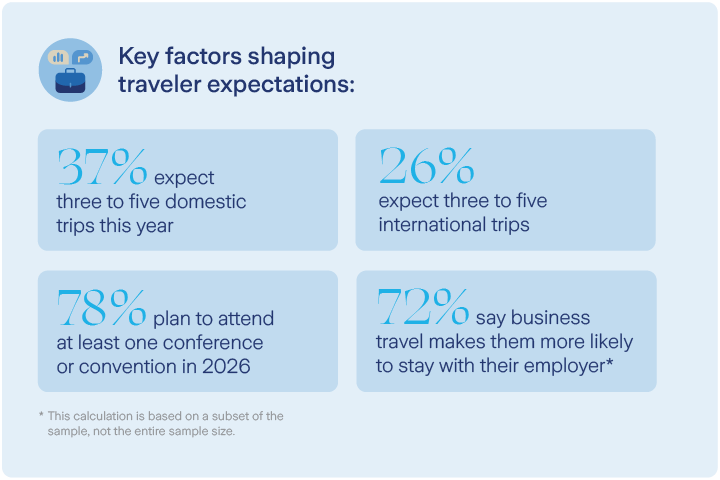
Growing demand for mobility is paired with a desire for thoughtful preparation, consistent communication, and reliable coverage.
Safety and medical concerns
Employees are increasingly focused on health, safety, and logistical challenges when considering work-related travel.
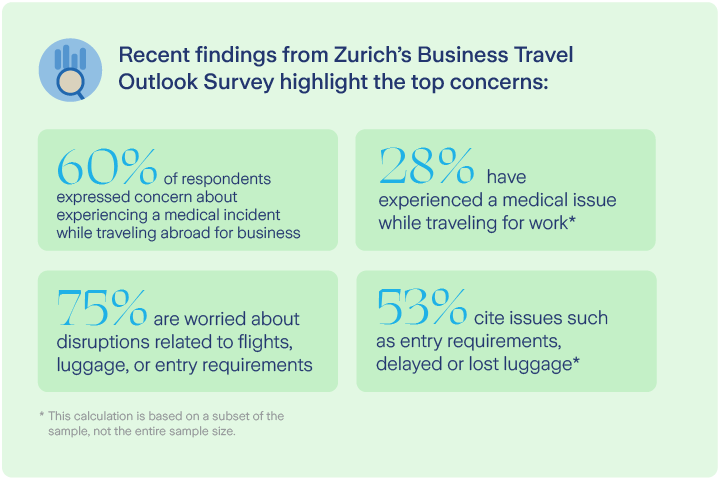
Employees increasingly expect their organizations to provide guidance that helps them understand risks before they depart.
What preparation looks like for travelers
Employees value clear communication, real‑time support, and access to help when unexpected events occur.
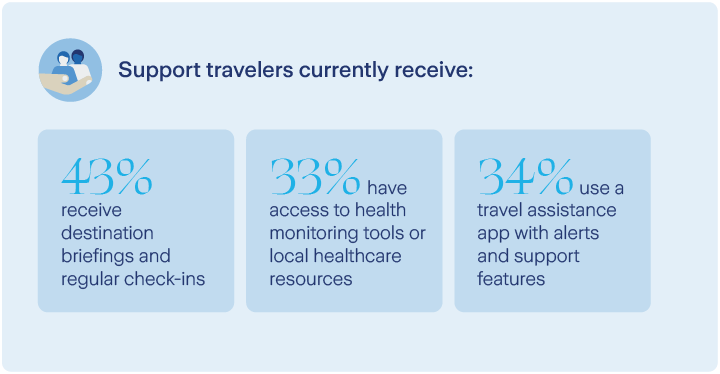
Consistent preparation builds confidence, especially for international travel.
The reality of travel disruptions
Travel interruptions continue to impact productivity, budgets, and employee experience.
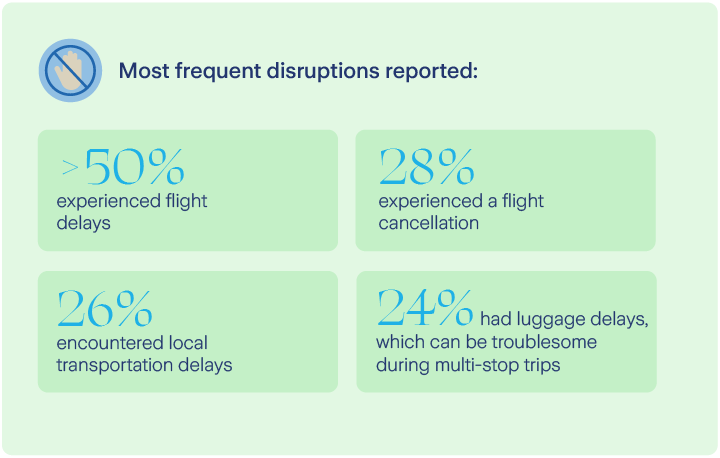
These disruptions often create unplanned expenses and require clear escalation paths and insurance coverage solutions.
How travelers blend business and personal time
Work and personal travel are merging, creating new exposure considerations for employers. Blended travel patterns are increasing:
- 69% expect to add personal travel to a business trip
- 63% plan to add a business meeting or work activity to a personal trip
- Employees extend trips for flexibility, convenience, and cost savings
Policies should specify when coverage applies as travelers move between business and personal time.
Why travel safety influences retention
Employees link travel support directly to how they feel about their organization. Travel‑related retention insights:
- 62% would consider leaving their job if they felt travel safety was not prioritized
- Employees rely on their employer to handle medical needs, logistical issues, and emergencies
- Strong duty‑of‑care programs help reinforce trust
Retention improves when travelers feel informed, covered, and supported.
How Business Travel Accident (BTA) coverage helps close critical gaps
BTA insurance helps employers address the health, safety, and disruption exposures that standard policies do not fully cover.
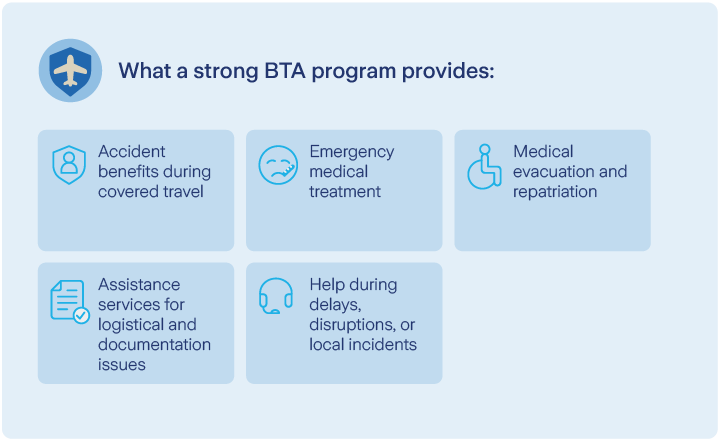
These solutions help employees travel more confidently and help organizations support them.
In the end, what modern business travelers want is simple: clarity, confidence, and care. This is what matters most to today’s traveling employee, and it aligns directly with the strengths of Zurich's BTA policy.
Zurich BTA focuses on the essentials that matter most to global travelers and the organizations that support them. The program offers flexible coverage for medical, safety, and travel‑related risks, global capabilities with locally compliant benefits, and a single access point to reliable, 24/7 assistance through Zurich Travel AssistTM. With fast claims handling and efficient policy issuance, Zurich helps employers support their travelers with confidence and gives employees dependable help when the unexpected happens.
This approach is supported by Zurich’s global study, which found that as business travel becomes more essential and more precarious, clarity, confidence, and care are what travelers value most. Read more.
*Note: This calculation is based on a subset of the sample, not the entire sample size.
References
*Data presented in this article comes from the Business Travel Outlook 2026 Survey, “The business-travel paradox: more essential, more precarious,” Zurich Insurance.