Slip and fall loss prevention for auto dealers
AutomotiveArticleNovember 19, 2026
Slip and fall incidents pose significant safety and liability risks for dealerships. Whether involving employees or customers, these incidents can lead to injuries, legal claims, lawsuits and operational disruptions. Fortunately, many of these accidents can be avoided through proactive risk management.
Common causes of slip and fall hazards
Two of the most common causes of slips, trips and falls are slippery walking surfaces — whether due to their design or contamination such as ice, oil or grease — and uneven walking surfaces, such as cracks, holes or stairs. These conditions can be avoided or controlled, preventing many slips and falls.
High-traffic areas for employees and customers should be evaluated closely for unsafe walking conditions. These areas include parking lots, customer service drives, customer waiting areas, restrooms and service bays. All identified hazards should be taken care of immediately.
High-traffic areas
- Stairs should be in good condition, of equal height and well-lit.
- Stairs with three or more steps should be equipped with a handrail.
- Curbs should be highlighted to warn of the change in height.
- Clearly identify and maintain designated customer walkways between parking areas, showrooms, service drives and customer waiting areas.
- Exterior lighting should be adequate and checked frequently for malfunctioning fixtures.
- Lot surfaces should be in good repair and free of holes and other obstructions.
- Implement a self-inspection program to identify hazards and ensure that necessary repairs are made promptly.
- All inspection programs should be documented and include follow-up procedures.
- Redirect downspouts away from walkways, as they can create a slip hazard during winter and summer months.
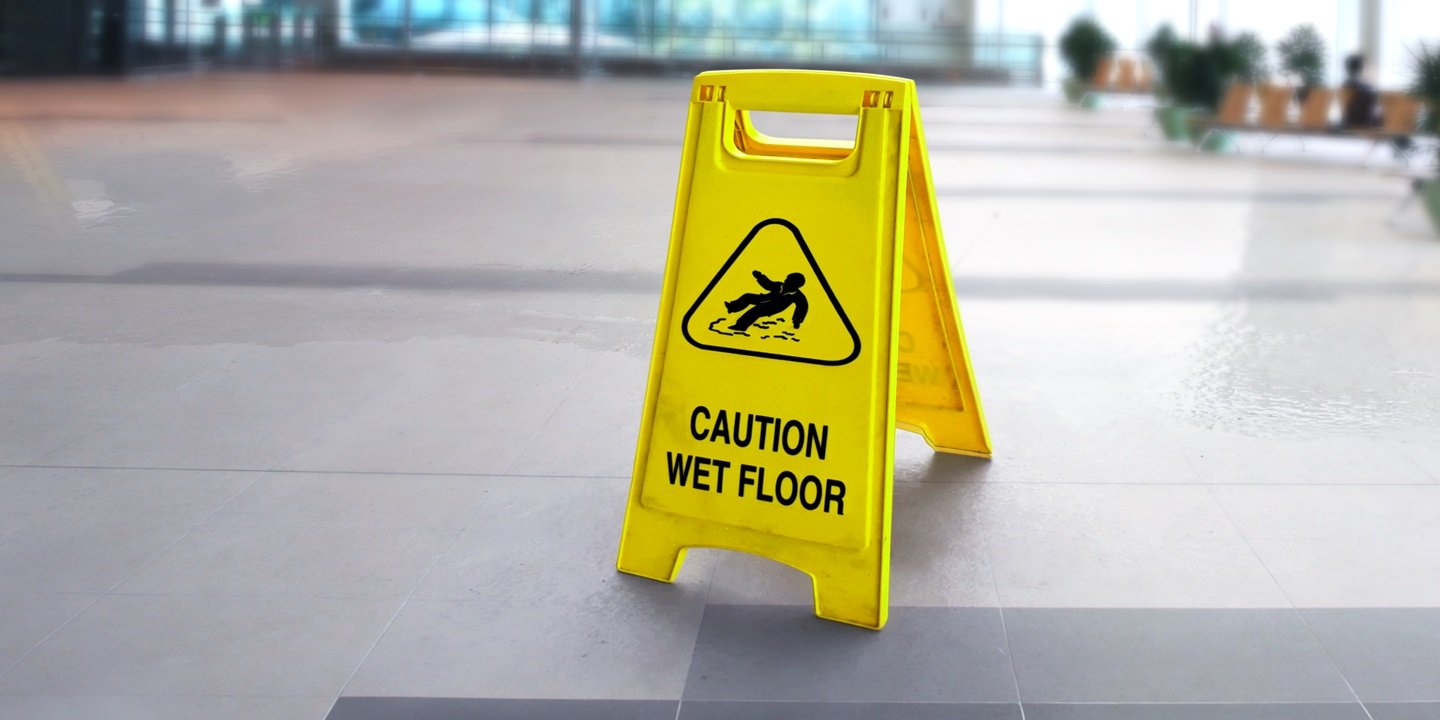
- Floor spills should never be left unattended (especially in customer traffic areas) and should be cleaned up immediately. Post a “Caution – Wet Floor” sign.
- An oil-absorbing material should be available for use on oil spills.
- All entrances into the building should have mats or rugs to help keep the floors clean and dry, especially during inclement weather.
- Entrances should be free of obstructions, including promotional displays.
- Aisles and hallways should also be free of obstructions.
Snow and ice removal
- Be prepared in advance for snow and ice.
- A snow and ice removal program should be developed and implemented. A single person should be assigned responsibility for monitoring and coordinating the effort.
- Have appropriate equipment, tools and supplies ready for use by internal personnel.
- Professional snow removal companies should be contracted/retained in advance of cold weather.
- Snow removal services should include regular on-site checks and 24-hour, on-call capabilities.
- Record pertinent data on a snow and ice removal log.
- Allow sufficient time for treatment to take full effect.
- Be aware that high piles of snow can reduce visibility in vehicle traffic areas, especially at corners.
- In the event of a slip or fall, injured persons should be attended to immediately.
- Accident/incident investigations should be conducted immediately.
To learn more about Zurich’s products and Risk Engineering services, click here, contact your Zurich representative, or call us at 1-800-840-8842 ext. 7449.