Lessons from data center claims
Convective stormClimate and EnergyTechnology and AIPropertyPodcastJune 3, 2026
Record date: 3/30/26
Air date: 6/3/26
As data centers grow in scale, speed and complexity, the risks driving claims are evolving just as quickly.
In this episode of Future of Risk, we explore key lessons from data center claims, focusing on the unique risks emerging from rapid construction, increasing project scale and evolving loss drivers. Our guests are Jimmy Johnson, Vice President of Property Major Case Unit at Zurich U.S. and Patrick McBride, Head of International Construction, Global Specialty at Zurich. Together, they unpack how rising project values, complex equipment and compressed timelines are fundamentally reshaping both underwriting and claims strategies. The discussion highlights major loss drivers such as severe weather, equipment sensitivity and construction sequencing, as well as the growing impact of delay in startup (DSU) exposures. Listeners will gain insight into how Zurich is applying decades of experience, data and cross-functional collaboration to deliver innovative solutions and help clients navigate these increasingly complex risks.
In this miniseries, other episodes include:
5/20/26: Billion-dollar questions in the data center buildout
Guests:
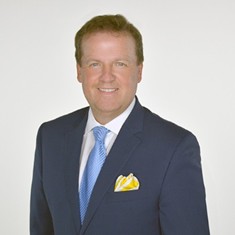 Jimmy Johnson
Vice President Property Major Case Unit
Zurich
Connect on LinkedIn
Jimmy Johnson is an insurance claims executive with more than 30 years of experience across commercial and personal lines, property, auto and liability. He currently serves as Vice President of the Property Major Case Unit at Zurich U.S., where he leads complex large loss, catastrophe, international and construction related claims operations. Jimmy brings a rare end to end perspective, having worked as an insurance agent and broker, a licensed mechanical contractor, a field adjuster and a claims executive. Known for driving operational excellence, expense management and innovation, he has led major claims transformations, catastrophe response programs and large-scale teams responsible for billions in insured exposure.
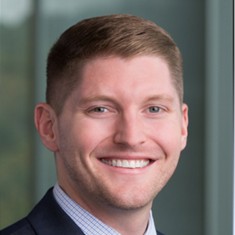 Patrick McBride
Head of International Construction, Global Specialty
Zurich
Connect on LinkedIn
Patrick McBride was appointed as Head of International Construction in Zurich’s Global Specialty Construction & Surety team in April 2026. In this role, Patrick leads Zurich’s international Construction operations, with responsibility for strategic growth across the UK, Continental Europe, Canada, the Middle East and Africa, Latin America, and the Asia Pacific region. He oversees a global team of regional leaders, supported by country heads and underwriting teams. Prior to this role, Patrick McBride served as the Head of Construction Property for U.S. Specialties at Zurich U.S, leading the organization's national efforts in Construction Property. The role included close collaboration with key brokers and agents to conceptualize, develop, and implement innovative first-party risk transfer solutions for Master Builder’s Risk, Project Builder’s Risk, Contractor’s Property, and Inland Marine programs. Further, he has launched multiple strategic initiatives addressing emerging solutions in Mass Timber, Sustainable Energy, Construction Weather Parametric, and AI Infrastructure products.
Host:
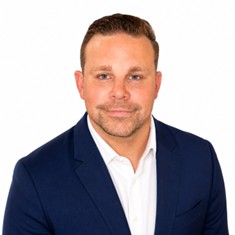 Matt Wagner
Head of Construction Property
Zurich
Connect on LinkedIn
Matt Wagner is the Head of Construction Property at Zurich U.S., where he leads the Construction Property business with responsibility for underwriting strategy, portfolio & people performance, and the continued advancement of Zurich’s market-leading capabilities. Prior to this role, Wagner held multiple leadership positions concurrently, serving as Interim Head of Construction Professional Liability, East Region Construction Property Regional Vice President, and E&S Construction Leader. In these roles, he was responsible for delivering profitable underwriting results, managing broker relationships, developing talent, and executing national and regional Construction strategies. He also previously led Construction Business Execution efforts, driving operational and organizational initiatives across the platform. Wagner graduated Magna Cum Laude from the University of St. Thomas with a Bachelor of Arts in Business Leadership and Management.
(PLEASE NOTE: This is an edited podcast transcript, capturing speakers with natural speech patterns that may include incomplete sentences and/or asides, grammatical errors, verbal shorthand and some statements that may be less clear in print.)
EPISODE TRANSCRIPT:
JIMMY JOHNSON:
These buildings are going up a lot quicker than we have in the past. The construction is at a rate that I haven't seen in my 30 plus years and I actually have some contracting experience. So I can tell you from firsthand it's the speed that I haven't seen before. And what does that mean? Well, speed equals time. Time equals money, right? So, we have to be in a situation that we've got to, as a claims team and a claims organization, we've got to be ready on all fronts to respond.
MATT WAGNER:
Welcome to Future of Risk presented by Zurich U.S. We explore the changing risk and resilience landscape and share insights on the challenges that face businesses to help you meet tomorrow prepared. We're continuing our Data Centers podcast miniseries by identifying key loss drivers and uncovering the lessons we take away from the claim side of data center construction and early operations. I'm your host, Matt Wagner, Regional Vice President of Construction Property for the East Region. And today I'm joined by two colleagues, Patrick McBride, Head of International Construction, Global Specialty and Jimmy Johnson, Vice President of Commercial Property Claims . Patrick and Jimmy, welcome to the podcast.
PATRICK MCBRIDE:
Good to be here, Matt.
JOHNSON:
Yeah, thanks for having us, Matt.
The impact of hyperscale growth on data center construction claims
WAGNER:
I'm glad that both of you two are here today. In our first episode, we talked about macro trends with data centers affecting both the construction and operational arena. Today, I want to dig into that a little bit more with both of you too, specifically on outputs. And by that I mean what we're learning from our loss experience and claims. Patrick, I'd love to start with you, what are some of the biggest differences between data center claims and other types of construction claims that you see as the Head of Construction Property?
MCBRIDE:
That's a great question, Matt. So, first and foremost, what we've seen in the data center space has been an amazing and unprecedented rise in the number of projects and the scale at which these projects are being built. What we would say is the number one difference in terms of general building exposures versus data centers is the atmosphere that we've experienced. Our own specific experience, which spans over the past two decades, has shown us that the critical risks have evolved over time and those risks aren't generically the same as they might have been five to seven years ago. I mentioned the size of projects to give you a little insight into Zurich's construction property portfolio through 2025. Our average project was around $785 million. If you back up five years ago, the average project was much closer to a hundred to $200 million in value.
Just to start ’26, that size has expanded to roughly over $4 billion per project. So that underscores the primary driver of the differences and that is the size and scale of which these projects are being built. Alternatively, you would expect with much larger size projects and the size that we're talking about is millions of square feet with multiple thousands of workers present on a site, on projects that can be multiple tens of billions of dollars in value. And what's exceptionally interesting is that the durations in the data center, how long it takes you to construct a data center, despite the growth that I just expressed, has remained relatively unchanged. The average duration in a data center in our portfolio today is around 24 to 26 months. And that is just a couple months short of the average duration in our portfolio. And then also we have not seen those duration increase, as you would expect with increase in size.
So, you have a unique and complex situation where you have the coalescence of speed scale with expectations continuing to be tight around project delivery, which creates an over encompassing challenging format. Secondarily, what's very interesting too, before I pass it to Jimmy for some technical insights, is what's really interesting is when you think about how those values are being constructed. For instance, five years ago, it's common to see a core and shell, otherwise stated, the exoskeleton of the building. The ratio of the core and shell to what goes inside the building, which are the equipment packages, most typically, was around for every dollar of core and shell was equal to around .50 cents of the equipment package. We've actually seen that ratio be completely reversed in some cases with the ratio being something like in today's market for every dollar of core and shell, we see close to $2 in equipment value. So, that also creates extreme pressures in terms of loss formatting and projections of losses. As we see these equipment packages not only be highly complex with healthy lead and lag times, but the value in relation to the core and shell has flipped. So, that's the over encompassing theme that we've seen in this space over the past five to six years, really underscored by the pace and scale of what's going on in the data center space.
WAGNER:
So, Patrick you're, you're quite literally seeing the size of these projects sometimes quadruple from where they were years ago, and the velocity, the speed at what they're going at, has largely remained unchanged. I would have to imagine that there's some underlying risk in there. So, Jimmy from a technical perspective, when you hear that, what are you seeing in terms of this scale?
JOHNSON:
Well, first, Patrick is absolutely spot on with everything he just said. I'm often asked this question: how are the traditional builders risk different from the data center builders risk? And I get that question quite often, and, you know, it has become a situation where you have to respond and really be able to explain the actual differences because it's a flip to, to Patrick's point, the building is just the building now, right? It's the shell of the building. What makes data centers more complicated and more sensitive comes down to the mechanicals, the electrical, the equipment inside—all those factors make it a higher risk of sensitivity. I can't express enough of how important it is for the building to be constructed in a way and maintained in a way where you have not only the protection but to maintain the temperatures.
You know, most of this equipment that's being installed in these data centers that I've seen so far are all built on platforms, and why are they built on platforms? They're built on platforms to help circulate air even better, right? So, where you're going to have air and cabling and electrical all underneath it, as well as on top. So, I couldn't agree more with what, uh, Patrick was indicating but I think now the equipment and the mechanicals present a little bit more higher sense of sensitivity, if you will, to be more receptive to power outages, be more receptive to other perils that we don't see in the traditional sense of the word.
Data center risk: Key loss insights
WAGNER:
Jimmy, I think that actually that makes a lot of sense. And, and maybe that kind of segues a little bit into this, but Patrick, you know, can you talk about what some of those key loss drivers are and what some of the takeaways have been that have come out of the data center boom.
MCBRIDE:
Absolutely, Matt and you know, it's a catch-22. Underwriters both love and hate to talk about key losses and large losses. But the positive side of that is that is our opportunity to learn and to grow. And as I mentioned, we're able to flex with our experience in having lived many of the most common as well as some of the most unique loss situations to build our understanding. And what I'd start with first, and this isn't necessarily germane to data centers, but severe weather has been and will continue to be one of the leading drivers of loss within any property or construction portfolio. Not unique to Zurich, from the data that we understand, but within Zurich's own results, the past three years, severe weather, specifically tornado, hail and otherwise straight-line winds have been the leader of our top 10 losses.
And why that's important to understand and contextualize is prior to three years ago, severe weather, as we define it, was not within our top 10 natural catastrophe. It has been and will always continue to be a concern when it comes to hurricanes, flooding and earthquake events. But the rise in severe weather situations has given greater credence to the concern of when we overlay a data center facility. And what's really interesting is, as we've evolved with the data center market, if you look at the U.S. population, many of the early data centers were aligned with population densities. And what I mean by that, in the United States, if you look at the density of the U.S., most of our populace is surrounding coastal territories, East Coast, West Coast, etcetera. But we're now seeing, as square footage becomes a challenge and the size of these projects, we're seeing many of these projects move to the inner corridor, if you will, or central corridor of the United States from the Dakotas all the way to South Texas, one or two states to the left or right.
And each one of these projects, I would surmise, has some level of exposure to severe wind. Our largest weather-related loss last year was around a $17 million tornado loss. That is germane to the business and really critical from a practitioner’s perspective, ultimately with the client in mind, to create the thoughtful and sustainable measures to encapsulate that exposure so that it can continue to be an insurable perspective. Hot works is another critical concern and what hot works is, is typically defined as is any welding or other activities dealing with high heat that could result in a fire on a project site. In fact, our largest loss last year was a hot works loss due to welding activities. This was roughly a $50 million gross loss. And then when you overlay the number of individuals on the site, the complexity and the sheer square footage of coverage, it's critically important and why we are an engineering first organization when it comes to defining and driving adequate fire and hot works mitigation strategies.
That's been our two largest categories, if you will, of specific losses. And then when you drill down into more of the attritional, or the frequency, within our portfolio, in large part it is driven by how I would encapsulate difficulties or challenges to the equipment packages. The equipment, the graphic processing units, the racking, the server systems are incredibly complex and unique equipment packages. And they are highly susceptible to damage, be it human error or acts of God. And it's really critical from a technique perspective, whether it's contractual in nature and or risk management in nature, to make sure that we are doing everything in our control to protect those equipment packages. So, from a very high-level perspective, severe weather has been and will continue to impact the data center market, as well as the broader build risk market.
Fire and hot works related losses will continue to be a challenge. Equipment packages unique to data centers, but that's not also to overlay with the fact that these projects are also susceptible to all other types of exposures that are germane to the Builder's Risk space. You might think not mentioning water is a big miss. Water and condensation and resulting any sort of water that touches an equipment package or these types of projects has and will continue to create large issues. So, water's germane to all Builder's Risk exposures. Data centers aren't necessarily not susceptible to those exposures, but there are unique aspects from a broad perspective that are impacting the delivery of successful data centers.
Sequencing risks in data center builds
WAGNER:
That makes a lot of sense. And Patrick, when your team is navigating just the underwriting known challenges that come with them, in addition to the opportunity that comes with them, Jimmy, your team on the other side is seeing this divergence where you have some of these known exposures and the opportunity. But when rubber really meets road, for you, from a claims perspective, what are some of those technical claims that are maybe a little bit more nuanced, in addition to what Patrick was just mentioning more on the severe convective storm side of things? What has your team seen for data centers
JOHNSON:
I think Patrick touched on a couple of the points. I'm going to give you two specific examples, if you will. This is derived from our experience, right? The first one is around hot works, as Patrick mentioned earlier. It's important when you are doing a data center construction, particularly the interior mechanicals, that you follow the proper sequence. We had a situation where the HVAC system was installed up in the ceiling, but it was installed before we had the safety hooks and harnesses welded in place. Meaning that when you have to service this type of equipment, you have to be able to harness off for safety to access the equipment because it's up in the ceiling. Well, they installed the equipment before they did the safety hooks. So they went back and started welding the safety hooks.
Now they did use some fire protection blankets, but unfortunately the HVAC system was, was activated and some of the sparks got around the fire blanket. So it ended up being a significant loss to us. Now why is that important? That's important to follow sequence because you can avoid this type of situation. Get your hooks, get your safety, follow the protocol you have in place and then if you do have to go back up, something gets out of sequence, you got to make sure that you got the right protection in place or make sure the HVAC system maybe is not running at a point in time since you shouldn't have any equipment in there or servers. So, you know, following proper sequential operations in construction is important. There's a reason that we have 'em lined out of when they do it and it can prevent significant amount of losses for us.
The other thing that happens from that perspective is these are off-the-shelf types of mechanicals, right? These aren't things that you can go down to Lowe's or Home Depots or Menards or any of those places and pick up these types of units. These units have a lot of lead time from a manufacturing perspective. A lot of 'em are dependent on global manufacturing, not just local manufacturing but global manufacturing. So some of 'em could take 18 to 24 months of lead time just to manufacture because of the tonnage that is needed. You know, Patrick mentioned about the water. So right now you got water cooling and you got air cooling, right? If you don't have the right systems in place in a right capacity, then we're going to be challenged. If you have something go down and you don't have the lead time in place for that.
So I think that's one thing that we have to always keep in mind is today's technology is a lot different than yesterday's and you have to have the right lead time in place in order to have these. Now, is it valuable to have redundancy systems in place? Yes, absolutely with data centers. It's very valuable to have redundancy systems in place. You know, the other thing that we see sometime, and I'm going to stick with the sequencing because I do think it's an important topic, is that we had a situation where the servers were installed before the final construction was completed. Now what does that look like? Well, because of sensitivity of this equipment, you can be exposed to two things, right? If you don't have the building fully enclosed and fully conditioned, you could have what we consider condensation. Condensation can build upon electrical servers, which then in turn could create damage warranty issues.
Not that our policy necessarily would respond, but warranty issues around the condensation, manufacturers don't want to warranty things that have been impacted by any levels of condensation. So that's obviously a challenge for us and it's a challenge for the insured. Um, so, so that's a big important point from that aspect. You know, the other one is dust and contamination from the ongoing construction, right? So, you know, if you're not finished construction and yet you've activated the servers, you're introducing that whole new element of potential contamination to this equipment. Again, I can't stress, and I know Patrick's already expressed it as well, how sensitive this equipment is. It is extremely sensitive. It generates a lot of heat. So we got to make sure that it's in a pristine environment. You know, I don't want to equate the environment almost like hospital-like, but it's almost hospital-like, uh, of having the conditions and surroundings and the atmosphere and the environment, everything very clean and secured and very properly maintained from an air conditioning perspective.
Claims readiness in a high-speed market
WAGNER:
Jimmy, I want to get to Patrick in one moment, particularly on that condensation piece, because when I think of condensation and electrical wiring and computerized equipment, I think of stuff going south very, very quickly. But before we go into that, I'd love to know, just from your perspective, again Patrick was talking about the pace of play and how big these projects have gotten when we opened, just from a claims perspective, from what you and your team have seen, what do you think has changed the fastest over the past 12 to 24 months that maybe people outside of the insurance and construction and data center space may not fully appreciate yet?
JOHNSON:
I would say a couple things, you know, from our perspective. So when we get a claim, there's a lot of things that we have to be prepared for, right? And with data centers, again, I want to mention to you that, you know, the power consumption is always of a concern. Meaning that what's the source of power? Is it onsite? Is it offsite? You know, how does that keep the system running? And then what type of redundancy systems do you have in place? And whether it's a redundancy system in the sense that you're keeping the building powered up or do you have the ability to roll over the data to other locations in order to continue your operation? So it's always good from a claims perspective to be able to be able to understand that aspect of it.
The other pace, these buildings are going up a lot quicker than we have in the past. The construction is at a rate that I haven't seen in my 30 plus years and I actually have some contracting experience. So I can tell you from firsthand it's the speed that I haven't seen before. And what does that mean? Well, speed equals time. Time equals money, right? So we have to be in a situation that we've got to, as a claims team and a claims organization, we've got to be ready on all fronts to respond, whether it's all fronts that help 'em with temporary power, temporary rollovers, helping identify where replacement equipment could be used, helping 'em with a financial analysis. You know, Patrick mentioned early on the cost, the investments in these data centers is significant.
So a lot of times you're going to have multiple parties that are financing this site, right? So that means that we have to have a strong coordination for claims of all the experts. We can't go in with just one or two experts. We got to be able to go in and be prepared to address the financial aspect and the physical damage aspect. We've got to help the customer to keep the construction going on, obviously, but we got to get 'em, we got to get 'em back on track as soon as possible because again, these are very short timelines and you know, the traditional of having three to four to five years of building these things, you know, are no longer the case. Now it's 24, 18 months and that means as a claims organization, we have to be ready every minute that we have that claim, we've got to be working towards resolution.
Condensation risk in data centers
WAGNER:
No, no doubt, Jimmy. You mentioned a key, uh, some really key items in there. What is the power source? It's moving really quickly. Lot of equipment, large scale footprint built in the corridor, center of America, as Patrick had mentioned previously. So, Patrick, let's pull back to that kind of concern that Jimmy raised around the condensation. These are, for lack of a better phrase, really large-scale warehouse-style construction projects with a lot of wiring and potentially a lot of computers in them, a lot of HVAC that goes into them for the cleanliness that's required. Talk to us a little bit about your view on that and some of the key considerations from an underwriting perspective.
MCBRIDE:
This was a critical consideration, again, as I harken back to the experience that we've been fortunate and privileged to have. When any sort of data center is going to be designed and constructed with some sort of clean room application, depending on tier structure, whatever it's trying to accomplish. And so, with a highly controlled environment, it does create challenges to achieve that environmental requirement. And that's not just when the facility is ultimately operational, but at key parts during the construction phase as well. What we experienced, and one of the drivers of launching our new data center project guard form, which includes expanded builder's risk coverage, our weather parametric solution, which indemnifies for delays or interruptions from weather events during the construction term and then the transitionary cover from a builder's risk to up to 12 months of operational property damage and business interruption.
One of the critical coverage enhancements was on the builder's risk side via our new coverage, which is deemed failure of climate control systems resulting in white rust. This was a specific expansion in cover, dealing with commonly denied claim situations for exclusions being triggered under what normally are referred to as expected, preventable or accumulated loss. In the scenarios that we found within our experience is, oftentimes, this can lead to disputes between the owner and the contractor. Zurich is fortunate enough to, in many situations, have relationships with both. Therefore, presented the opportunity to see where and how we can expand cover to encapsulate this exposure, which is somewhat germane to every data center dealing with failure of those said systems and result in condensation resulting in rust forming on the equipment. And so this was a specific item that we experienced in a number of claims and rolled that experience in client feedback to be motivated to expand the cover to help alleviate some of those friction points between the owner and contractors as well as develop and bring new coverages specifically in response to denial scenarios where we feel the need to step up and provide indemnity is there, which didn't exist in the past in the general marketplace.
So we're really excited under that product format to use that to address not only that particular situation, which has been a key theme, but also other new and unique situations that have been very thoughtful included within the policy form.
WAGNER:
That makes a lot of sense. Zurich specifically went out, broadened this to reduce some of that gray area germane to data center-specific construction given what, what both you and Jimmy already mentioned with that buildup of equipment and climate failure systems. That actually makes a lot of sense. Patrick, I'm just curious from your perspective, when you work with Jimmy on these claims and you guys are seeing them come in, is there something from your perspective that you feel the market is still underestimating about data center risks?
MCBRIDE:
Yeah, I think the confluence of what we've seen really starting around summer of last year and from a market perspective, this response is in regard to the capital markets. We saw a very distinct shift within the capital markets in summer of last year, requiring full limits be delivered on many of these multi to tens of billion dollar projects. So that's one of the critical changes and potentially educational opportunities that we have as an insurance industry and those stewards of capacity to deployment to help inform on an EML basis or projected loss forecast basis, how can we tie capacity requests much more closer to the exposure profile. And in large part, that is the opportunity today both from an underwriting carrier perspective to thoughtfully deliver greater capacity to meet those needs, but also conversely, understand what influence the insurance market has on those capital markets to help scientifically provide much more closer limit deployment strategies that are tied closer to the actual loss forecast.
So that's one of the major changes and items that we're grappling with. Then you think about some of the common physical exposures and some of the limiting features. One that we haven't mentioned, in addition to power, skilled labor continues to be a problem, but we talk a lot about water sourcing at the underwriting level as well. And many listening to this podcast might think water protection from a sprinkler standpoint. Well, there's a wonderful debate from a construction lens or an operational lens on what is the most opportune time to charge those sprinklers. From a construction perspective, it's just as big of an exposure to have a charged sprinkler and potentially a ladder breaking a sprinkler head, resulting in a water damage claim. So the construction engineers might want to see a little bit of a lag on those sprinkler charging.
And then if you look at it from an operational perspective, they want those sprinklers charged the first time the very first shovel goes into the ground. So that's one aspect, but the other aspect is just water sourcing that we don't often ask that we do on data centers is, is there enough available water at the site in order to fight a fire from an emergency services perspective? Oftentimes these projects can be in exceptionally remote areas. We were fortunate enough to write one of the largest data centers in the U.S., which was over a four mile long project site. So that begs the question, which is situational to each and every data center is, are the local emergency services not only prepared and have the experience to fight a large scale fire, but do they simply have enough water resources in some of these remote locations in order to meet those needs? Which is another challenge that we're seeing in this space. So again, some complicated perspectives from a market standpoint as well as some of the physical asset protection perspectives that have been evolving in this space.
Contingency planning for data center risk
WAGNER:
So with all of that, I just, everything continues to come to mind. Like we're learning in real time about how to manage these types of exposures. We're dealing with new exposures, right as they come up. Jimmy, how do we minimize the exposures as they're coming up? In a future episode, we're actually going to be fortunate enough to host some risk engineers to speak in greater detail about this, but what are some risk management techniques that customers are using right now to safeguard these large-scale mega projects from loss?
JOHNSON:
I think the first key, and I think I've said this like six or seven times so far so I'm going to say it one more time. I think redundancy is such a critical component, being able to have backup systems, have contingency plans in place. To Patrick's point, you know, a lot of these are located outside of big cities, so you know rural locations having different water sources and things of that nature. So I think that's all very critical. To give you an example: you know, in the Middle East conflict recently, there were two large data centers that were impacted. And both data centers were successfully able to roll over their data, meaning that their customers did not lose access to data. And why is that important? That's important because they had the redundancy systems in place. They had the contingency systems in place. And that was able to help keep them going, keep their customers happy, obviously being able to get access to their actual equipment. You know, I'm going to put my contractor hat on a minute because I'm going to echo this a little bit. Much like you do in your homeowners or things of that nature, you typically have service agreement on some of your big equipment, big expensive equipment right? I'm a big proponent of having service agreements in place with this big equipment. So like, if you have periodic inspections for your HVAC system, your cooling source, whatever the case may be, have them quarterly come out, do service, make sure that there's nothing there that's going to create an issue or they see loose wiring or something like that, they can go and correct 'em before it becomes an issue. So I'm a big proponent of having, you know, interval services, particularly on the heavy mechanical equipment with the HVAC and the transfer switches and things of that nature as well. So I think that's also a paramount piece.
If you have the opportunity, make sure that you have contracts in place or contacts in place with manufacturers or suppliers, right? If you have at least a list of places that you know you can go to, if something was to go down, then it helps expedite the situation. If you're trying to determine, "hey, where did I get this equipment again? Where do I need to get this again?" you know, keep all that information in your contingency plan. That way when you do have a claim, you do have a loss, you know, your adjusting team is going to work with you and they'll be able to help identify also additional resources. But any information you have where you bought the original equipment or who's servicing the original equipment would be beneficial and it would help expedite the claim process as well and hopefully at the end of the day help with the resolution quicker.
Managing delay in startup risk
WAGNER:
Jimmy, when you talk about redundancy and you also mentioned that time is money. There's no doubt that money on these projects is at a velocity that we have not seen before. Patrick also mentioned previously that there's a lot of different parties that need to be engaged in the event of a claim and a lot of people that are financing these large-scale projects. Patrick, that immediately makes me think of delay in completion or delay in startup (DSU) values on these projects. Can you talk us through what you're seeing in the marketplace right now as it respects those values and how that has implication from an underwriting and claims perspective?
MCBRIDE:
Yeah, I'll get to that Matt. I think it's critical, but I think your question about technique is critically important and from a high level, from an underwriting lens perspective, the one critical start of the technique. You know I'll always encourage early engagement from an engineering perspective and this will lead to the DSU piece. It is critical for brokers and clients to continue to focus on how underwriters are reviewing risk selection in the data center space, overlaid with the industrial revolution type scale that we're talking about. And not to lose focus on the criticality of working very closely with an engineering-led construction focus organization. Because what we are seeing is given the massive rise in project values, non-time element related, that is translating to much higher estimated maximum loss scenarios. As you can imagine, it's just math.
So what that translates to is needing more carriers to support traditional placements in order to build up to the current capacity needs most in the capital market are driving. So that's on the hard cost side. What we're also seeing in the delay in startup, which is typically under a Builder's risk form used to cover time element exposures, things like future loss of earnings, future loss of rent for the asset. We're seeing the DSU values rise in correlation to the hard cost values. From our perspective, anytime you have a value of $75 million in potential earning exposure, that typically is considered a larger DSU request. So I hope everyone is sitting down listening to this. It is not uncommon on an average risk to see anywhere from $300 to $600 million in DSU. As of late, we have officially seen one of our largest DSU requests in the 30 years as a construction organization at around $2 billion.
So the values on the time element side are truly unprecedented. And from an underwriting perspective, DSU is typically considered 100% exposed, as it is a time element exposure. So what that means from an underwriting standpoint is for every dollar of DSU that is assessed within a risk, that increases your estimated maximum loss calculation by a dollar. So DSU is added to the EML (estimated maximum loss) calculations one for one, which means the higher the DSU value, the guaranteed higher the estimated maximum loss scenario; consequentially, that again puts pressure on carrier's ability to deploy larger lines. It typically restricts lines. So then the technique perspective is to understand first and foremost the impact of large DSU requests and be really thoughtful about some of the pieces that Jimmy mentioned to add at an eighth time redundancy. It's important to share with the underwriting market what the redundancy from a time element perspective looks like.
If there's damage to a construction project, can the intended data outputs or expectations of delivery be shifted to another location within a particular project? Are there abilities to add monthly limitations to particular data halls to help build up that capacity? Things like that, when we look at amount subjects as well, considering the spread of risk and how we roll those projects from a phasing schedule perspective, gives underwriters and clients more bandwidth to think of creative solutions to both offer the limit but, in exchange, find ways to encapsulate the limit so that we can meet some of the contractual obligations or needs. But the DSU values absolutely are astronomical and continue to rise.
Navigating complex delay in startup claims
WAGNER:
Patrick, to your point, I mean that sounds like that’s an absolute kind of misnomer dedicated to the data center space. It's also something that's very difficult to manage towards. So Jimmy, I guess it just begs the natural question, has this become a claims issue? And what does that look like?
JOHNSON:
When you have this type of a loss with DSU, you know, you've got to go prepared. And here's what you have to be prepared with. One, you've got to understand where they were in the sequence of construction, meaning that where were you? Were you on schedule? Were you behind schedule? And if you were on schedule, then would this loss that's impacted you, do we have the ability for you to re-sequence certain construction items to keep construction going while we work to figure out how best to quickly and effectively resolve the impact to damages? Right? The other thing is the financial piece, right? We'll know to a certain extent what it generally would look like, but we need your data. We need to make sure that you keep your financials at hand so we can understand what the loss is and the implications of the loss.
A lot of times, you know, because of the amount of money these cost to build, there's a lot of financing behind the scenes. There's people that may not be listed as additional insured that could have some interest that could come forward. So the better that they keep the financial records, the quicker we can analyze the potential loss. Looking at their construction schedule, what can we do quicker? Understand that the quicker you get us this information, the quicker we can analyze, the quicker we can keep you going. So I think the key for us is to make sure that we understand where they are in the stage of construction at the time of loss. What can we do to keep them going? What other aspects can they keep working on under the construction while we work to resolve the damage areas? And then at the end of the day hopefully, we'll have good financials that we're able to take a look at and make an analysis on and pay to the insured what their loss would be. That way we keep them in a condition that's similar to their pre-loss condition.
WAGNER:
Jimmy, that makes good sense. So, I'm just curious, when you're comparing a physical damage loss to a delay in completion loss, again just with the speed that these are being constructed at, which one tends to compound the fastest? Is that going to be on the physical damage side, trying to understand where things are going or is that going to be more on the delay in completion side when the project's still ongoing? What does that look like from your perspective?
JOHNSON:
Yeah, I would like to say each one of 'em would look the same, but they don't, they kind of vary from claim to claim at times. I would say, for the experience in the data centers, I would say the time settlement is probably the biggest concern, if you will, meaning that the physical damage is something we could physically see. We could look at it and go okay, this is damage, this has got to be replaced, whatever testing we need to do, whatever that case may be. And then, you know, the challenge with that obviously is making sure that we can get the equipment replaced timely, but all that is going to have a direct impact on the time element. The longer it takes us to get equipment in place, the longer it takes us to clean repair, the more time element exposure, right?
So, I would say time element for the data centers is a little bit more pressing in my mind, in my eyes, because the physical damage, it is what it is. We can see it, we know it, and then we can build a parameter value. Anticipated loss of income, the time element aspect, that that can be a little bit challenging. And it can, you know, candidly, for lack of better terminology, it can snowball a little bit. So we've got to make sure that we've got constant communication in place. We've got open lines of communication, direct communication, we have our consultants on site, we're on site, we're working hand in hand with the insured to understand every aspect of that loss and how it was financed and then make sure candidly that we keep them moving right along. Meaning that, you know, if we need to issue advancements, something along those lines, to keep money flowing if we suspect that there's going to be a loss and then try to get the number wrapped up as soon as we can.
Aligning underwriting with risk exposure
WAGNER:
Makes sense, Jimmy. Thank you. Patrick. When you hear Jimmy talk about the delay in completion and the physical damage losses, what does that reinforce, or what does that challenge for you and your teams on the underwriting side?
MCBRIDE:
Yeah, for us it reinforces the importance of the risk, quality and characteristics, and when Zurich is deploying lead formats from a leadership standpoint in the data center space to drive awareness. And the most important pieces are to be sharing these messages now, not at the point of when we have a claim. So it's bringing awareness to not only the sheer size and scale of these projects, but it's doing exactly what we're articulating. And that is that the DSU values do have major impact, particularly on a line setting perspective. And what techniques can we partner with to help spread or mitigate that exposure above and beyond terms conditions within a policy? That's the critical piece in sharing with our brokers, the benchmarking and the expectation, and making sure that we're not losing awareness and that comparison point, and that we're not taking these values lightly. It's really important.
Closing insights on data center risk
WAGNER:
So with that, for both of you, just for our audience, any closing thoughts that can come to mind for either of you two that you want to leave our audience with specific to what we're seeing in claim?
MCBRIDE:
Yeah, I think from my perspective, before I hand it to Jimmy, we're exceptionally fortunate, like I said, with a number of relationships on an owner as well as contractor side. Over the better part of two decades we've been insuring data centers, to build a massive experience bank. So our impetus in what we're endeavoring is to bring that data and analytics to the marketplace to make more and better informed decisions. But I think the most important piece from an underwriting lens perspective is to not lose sight of what differentiates risks and that the basics of quality design, quality engagement with your underwriting community, seeking that feedback, being open and curious to benchmarking and how to best protect your facility. All of those things can't be lost as we're dealing with truly something that many of us in our careers will never experience again.
MCBRIDE:
But the critical thing and message that we endeavor with our clients is that resiliency perspective. That it's not just from a design construction and a couple years operational. That we want to put the risk in the best possible position for decades into the future. And it's really heartening and focusing on that resiliency component and ensuring that these hard physical assets are as protected as they can be as things change in the future. So that's really the critical message to lean in with carriers and partners who have that technique and have the experience to partner. And typically those outcomes will be positive.
WAGNER:
Jimmy?
JOHNSON:
Yes, Patrick, spot on. And just from a claims perspective, what I can share with you is that these aren't just bigger construction claims, right? These are fundamentally different claims. They're a little bit more complex. The combination of scale, equipment intensity, long lead supply chains, power dependency, extreme schedule sensitivity makes them more complex, more time critical and more strategic than almost any other construction loss that we have here. The great thing about Zurich, and in my 12 years with Zurich, is Zurich is very forward thinking. We were constantly looking at what's next, what's next? And I can remember Patrick reaching out in September of last year and saying, Jimmy, we're going to make some modifications to our policy because the market needs it. And it was just such a partnership between underwriting risk, risk management, risk engineering, claims, product development and product pricing.
Well, we just all get together and we get the opportunity to kind of share our thoughts. And then these are the kind of things that come from those. And it's just a privilege to be part of an organization that is constantly looking out for the customer and what can we deliver for the customer? What gaps are out there in coverage? And I think this new product provides it all. It not only provides the traditional Builder's Risk with some enhanced coverage; it gives you some parametric opportunities from a weather perspective. And lastly, it gives you something that candidly, it's been a gap for a while, and that's operational coverage, transitional operation coverage. So, um, I'm excited. I hope all of our Zurich colleagues are as excited as we are, because it is something that we should all be proud of, that we're able to bring a product like this to the market to service our customer and meet the demands of the need of the industry.
WAGNER:
Patrick and Jimmy, thank you both for joining us today.
MCBRIDE:
Thank you, Matt. It was a great time. Appreciate it.
JOHNSON:
Yes, thank you Matt.
WAGNER:
And thank you for listening. Stay tuned for our next episode the human side of data center. If you like the show, leave a comment or review wherever you get your favorite podcast, or drop us a note at media@zurichna.com. This has been Future of Risk presented by Zurich U.S.