
Protecting claims integrity in an evolving fraud landscape
PodcastOctober 7, 2026
Record date: 8/5/26
Air date: 10/7/26
In this episode of Future of Risk, part of the Claims in action: Driving better business outcomes miniseries, host Catherine Marciniak, SVP, Head of Property & Casualty Claims at Zurich U.S., sits down with Delpha DiGiacomo, VP, Head of Claims Investigative Services at Zurich U.S., for a closer look at the fast-changing world of insurance fraud. In “Protecting claims integrity in an evolving fraud landscape,” they explore how fraud has grown more sophisticated, from staged accidents and organized schemes to AI-generated photos, videos and documents. Delpha shares how Zurich Claims Investigative Services helps protect the claims process by identifying suspicious indicators, uncovering facts and collaborating across teams, customers and the broader insurance industry. The conversation highlights why fraud mitigation is about more than cost savings — it’s about protecting customers, supporting accurate claims decisions and preserving trust in the insurance process. Listeners will come away with a clearer understanding of how Zurich is using collaboration, technology and investigative insight to help drive better claims outcomes.
In this miniseries, other episodes include:
9/9/26: Road to recovery: Workers’ Comp and Managed Care
9/23/26: Medical Bill Review: Verifying care, validating costs
Guests:

Delpha DiGiacomo
VP, Head of Claims Investigative Services
Zurich U.S.
Connect on LinkedIn
Delpha DiGiacomo is a distinguished insurance professional with over 22 years of experience in the Property and Casualty sector. She currently spearheads Claim Investigative Services for Zurich U.S. Delpha serves as the chair of the Coalition Against Insurance Fraud’s Government Affairs Committee, where she advocates for integrity and transparency in the industry. She was recently named to the New Jersey Banking and Insurance Fraud Advisory Council, contributing her expertise to advancing fraud prevention, detection, and industry collaboration efforts; and earlier this year, she joined the Fraud Community Board for the Claims and Litigation Management Alliance (CLM), the premier professional organization dedicated to advancing the claims and litigation management industry. As a member of the Fraud Community Board, Delpha helps shape industry discussions, influence educational programming and collaborate with leaders across multiple disciplines on emerging fraud trends and solutions. Her participation further strengthens her voice in important conversations impacting our industry.
Host:
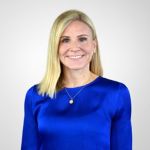
Catherine Marciniak
SVP, Head of Property & Casualty Claims
Zurich U.S.
Connect on LinkedIn
Catherine Marciniak is the Senior Vice President, Head of Property & Casualty Claims for Zurich U.S., leading teams responsible for delivering exceptional claims outcomes while driving operational excellence across the organization. Based in Schaumburg, Illinois, she is recognized for her collaborative leadership style, commitment to developing talent, and ability to navigate complex business and claims challenges with clarity and purpose. She is known for building high-performing teams, fostering strong cross-functional partnerships, and bringing both resilience and authenticity to her leadership.
(PLEASE NOTE: This is an edited podcast transcript, capturing speakers with natural speech patterns that may include incomplete sentences and/or asides, grammatical errors, verbal shorthand and some statements that may be less clear in print.)
EPISODE TRANSCRIPT:
DELPHA DIGIACOMO:
In 1995, the cost of fraud was estimated at $80 billion. That's 80 with a B. In 2022, they reran the study - that number now is $308.6 billion.
CATHERINE MARCINIAK:
Insurance fraud is not a victimless crime or a back-office issue. Across the insurance industry, fraud creates unnecessary costs, delays, resolution and adds complexity for insurers, customer and legitimate claimants. It can show up as a staged accident, an exaggerated injury, provider fraud, cargo theft or a more organized scheme. For claims teams, the challenge is to uncover the facts early, support accurate decisions and protect the integrity of the claims process.
Welcome to Future of Risk, presented by Zurich U.S., where we explore the changing risk and resilience landscape and share insights on challenges facing businesses today.
I'm Catherine Marciniak, Zurich U.S. Head of Property & Casualty Claims. This episode continues our Claims in Action miniseries focused on driving better business outcomes. Today, we're going to be looking at fraud investigations and how fraud can really impact the integrity of claims. I'm joined today by one of my favorite colleagues to talk with, Delpha DiGiacomo, who leads Zurich Claims Investigative Services in the U.S.
DIGIACOMO:
Hi, thank you for having me.
The rising cost of insurance fraud
MARCINIAK:
Yes, thank you for joining. You always bring so much energy to the conversation, so I'm so excited that we have this opportunity to talk today. So, I wanted to kind of just kick us off and maybe this is a softball, but if you can talk through a little bit about how fraud can impact insurance claims and the claims costs that we see, and what are you seeing today that's most prevalent?
DIGIACOMO:
So the numbers don't lie. The Coalition Against Insurance Fraud continues to put studies out that focus on the impact of fraud in general, impact of insurance fraud in both property casualty and in healthcare. Those numbers are incredible. In 1995, the cost of fraud was estimated at $80 billion. That's 80 with a B. In 2022, they reran the study -- and please know that that study includes a lot of data, including census data and other types of data like university studies, et cetera -- that number now is $308.6 billion.
MARCINIAK:
Wow.
DIGIACOMO:
Again, with a B.
MARCINIAK:
With a B, yeah.
DIGIACOMO:
Yeah. Those are the numbers. Those are real. That's not like fake news. It's not an exaggerated number. For Property & Casualty, that's a total of $45 billion. Workers' Compensation alone equals about $34 billion. And with Zurich being a commercial carrier, we're absolutely paying attention to this. The trends are always the same. Fraud is a human crime. All that's changed is how humans do it. So there's been an evolution, the type of technology that people are using to commit fraud. So, we've gone from the lie of omission to, "Hey, let's get together and fake this accident." That still happens today. But now we're looking to combat, is the accident that never happened, but there's video footage of it. There are pictures of it. There's a record in social media of it, and it's all fake. It's been created by AI so it's the same.
MARCINIAK:
Yeah, that was going to be - go ahead. No, I'm sorry to interrupt, but that just kind of gets me a little bit excited about the topic, just because with AI starting to become such a tool that everybody has access to, I mean, how many deep fake videos do you see every single day while you're on social media? I can't believe that they're able to stage accidents with it. And from a video perspective, supporting photos, damages to a vehicle, if you will, for example. I'm just amazed that they have that ability to create that type of content.
DIGIACOMO:
Yeah. And if you think about it, the evolution of AI is really aligned with also how humans, people in general, in the United States at least, are viewing fraud as potentially not a crime because it's now easy to do. And so if you think about the statistics of AI utilization, it's about 31% of Americans say that AI makes your life easier. That's true. It's true for me. I love it.
MARCINIAK:
And growing every day, right?
DIGIACOMO:
Oh, growing every day. Yeah. Love it. It's so helpful. However, the attitude to fraud, and this is another coalition study that happened in or about 2022. 53 million Americans don't view insurance fraud as a crime. That's 16% of all Americans. And 30% of those were under the age of 45. 55% of Americans know someone that has committed insurance fraud, and they don't blame them. 35% of them --
MARCINIAK:
What's the rationale for that? Does it give any insight into why folks could be leaning that way?
DIGIACOMO:
Yeah. The study talks about from an attitude perspective; it's not viewed as hurtful to anyone. And you opened up with insurance fraud is not a victimless crime. Well, we're all victims, right? And when you think about it from a commercial perspective, what people are thinking is this is an entity. It's a company. I'm not really hurting people. But in fact, you are. Yeah. If you're staging an accident, there's people in the car. If you're faking injuries at work, you are affecting all of those workers that are working on your job site or at the processing center. It doesn't matter. You're actually affecting people. You affect the people that have to pay the premium for that. And so while the perception of fraud from a person perspective is that I'm just doing this and this is just a company.
DIGIACOMO:
That's not a big deal. They got plenty of money. The money comes from somewhere and it comes from people.
Investigating insurance fraud claims
MARCINIAK:
Yeah. I mean and you raise a good point too, just about how some of these fraudulent acts can divert probably employee resources away from other work if we're talking about a fraudulent Workers' Compensation claim. I assume having to investigate fraud can cause delay and overall claim resolution. Talk to me a little bit about that and what you guys see.
DIGIACOMO:
Yes. So, when SIU becomes involved — and that would be my team — it really requires collaboration across the claim's ecosystem. We are talking with staff legal. We're talking with panel counsel. We're talking with the adjuster. We're talking with their manager. We are speaking with everyone that's associated with the processing of the claim. It does take longer because we have a regulatory duty to complete a thorough investigation once suspicion of fraud is present in any file. And that's because the states have mandated carriers to protect the consumer that way. And so, I have to do a good job. My team has to do a good job. It takes a little longer. And while it takes a little longer, reserves are up longer. We may be using other tools like accident reconstruction or surveillance. We may be sending additional experts out. We may be conducting examinations under oath.
DIGIACOMO:
So it does take time. It's a process. But in general, it does a couple of things. One, it reassures both the claims professional and the insured that the claim is being paid correctly. And so if fraud is found or misrepresentation or abuse, then we can take action and pay what is really owed or potentially the claim gets denied because it's so salient that under the law, this is not a payable claim. Now - Yeah. That comfort, I think is very important. Most questions that I get, usually when I show up in a room and there's customers, it's, "What are you doing about fraud?" We're doing a lot. We're doing a lot. Yeah. And it does delay your process. But nobody walks out of those conversations or in a round table conversation with an account saying, "Gosh, I wish they could find. I just wish they could do this a little faster." That's not what happens.
DIGIACOMO:
What happens is -
MARCINIAK:
Yeah, they want to know that you're doing it right, right? You're taking your time, you're being thorough. I mean, I can't imagine anyone saying investigate faster.
DIGIACOMO:
No, and really, the thought process is this. Red flags and indicators are meant to be investigated. That does not mean we're going to find fraud. A lot of times, we confirm the claim. And when the claim is confirmed, you're also reassured that we're paying the right thing.
MARCINIAK:
That's right.
How Zurich Claims Investigative Services safeguards claims
MARCINIAK:
So Delpha, I mean, you lead our Zurich Claims Investigative Services in the U.S. Can you share with the listeners kind of what role ZCIS does play in the claims process?
DIGIACOMO:
In very simple terms, we safeguard the claims process and ensure that what is happening in the body of claims is the right thing at the right time. And that's very different from the medical bill review process. They're very different from our regular claims handling process. What it means is that we actually, as a carrier, have a regulatory duty across the country. 50 states, including the District of Columbia, regard insurance fraud as a crime. Our duty as a carrier is to investigate it when the indicators are present. And according to the National Insurance Crime Bureau, on or about 10 to 20% of insurance claims have suspicious indicators.¹ So the duty that we have is to investigate. That provides additional information that's actionable and relevant to the claims professional so that they can make the best possible decision. So if you think about when you go do an independent medical examination, you're hiring an expert to complete that examination. We are the experts on fraud and fraud investigations. You don't have to hire us because we're already part of the claims process.
MARCINIAK:
And if you're a customer, does your team only get involved if there's actually been a reported claim? Or is there services and support that you're providing even before a claim even happens?
DIGIACOMO:
I don't believe in waiting for the event to occur before we get involved. So we're consistently pulling a lot of data for our customers and prospects to understand our book and really dig into what are your risks? What is happening from a fraud space? What types of cases have been referred in the past and are trending based upon your type of business and what we're seeing in your own book? Because while something might be trending in your type of business, and I'll use trucking as an example, in trucking, we're seeing a lot of theft of, um, the transportation of vehicles. You might not have gotten hit yet, but "yet" is the operative word. What I want is to make sure that the customer understand the risks that's out there. So we will send out risk alerts. So even if you haven't seen the issue, we'll send out a risk alert, let you know, "hey, this issue is happening in your industry.
We are starting to see it move. These are the states where it's happening." And now you're more aware. unlike a lot of carriers, you actually have access to me and my team directly. So we're not going to wait until the adjuster tells us, "Oh, hey, you know, we need a special investigation on this particular file." You might have a sense for, let's say your job site might have some issues that you're starting to notice. You can absolutely pick up the phone, get in touch with me, get in touch with one of my managers, and we can have a discussion about what that could look like on your job site. And then look for areas of opportunity where we can deter that behavior from happening. And that could be everything from training managers and training your staff to doing onsite visits. There's a myriad of things that we will do before claims happen so that we are prepared from a Zurich perspective, but that you as a customer is also fully aware of what's happening.
Collaboration in fraud investigations
MARCINIAK:
That calls out the fact that fraud investigations don't happen in these vacuums. It's a very specific claim that you've been engaged on by a claims adjuster. I think what you just spoke about really highlights and calls out how important collaboration is in combating insurance fraud, both at the time of a claim and before the claim even gets filed. So, tell me a little bit more about all the collaboration that your team is doing across the Zurich U.S. and with our customer base.
DIGIACOMO:
Yeah. I'll actually give you a very recent example. I host a call with a particular construction company that's a Zurich customer. And they have a new job site that they've opened up. They have all the right things. We spent about a year and a half having conversations about what the safety looked like, having the cameras. You're badging in, badging out. All of these items are now in place at their job site. There were three claims that came in. All were denied based upon the fact finding that was done by the adjuster. But they also flagged in our systems. And in the conversation with our customer, we talked about, "Hey, while these were denied, these guys showed up in two other of your job sites. So these injured workers are into other job sites and they have a history.
I think we need to watch your job site because it might be a target right now in that jurisdiction." That's what happened. Then we called the adjuster, we called the manager, had a conversation about we're going to continue to monitor this. So if we ask for the file, send the file. And absolutely, there's never a hesitation from the claim side. We ask for a file because we're going to be proactive about it, they send the file and they're fully cooperating with us. At the same time, we'll have a conversation with the counselor or the attorney for that particular customer and let them know, "Hey, these are going to be work comp. They're coming. We're seeing an issue. We're getting ahead of it now." That's the power of data. And just to circle it back to the AI, we use a lot of AI to gather that information. And then we have a human look at it, analyze it, determine the pattern and then we have a conversation with the customer about it.
Sharing data to combat insurance fraud
MARCINIAK:
So you're using it to enhance your current investigation process, not replace it. So I think that's something that's really important to call out. And, you know, as you were talking through that trend that you were able to identify, I'm just wondering, how much data does your team have access to and how are you leveraging analytics and AI to help you flag even more trends that might not have been previously identified without that support of enhanced capabilities?
DIGIACOMO:
So that's a hard question to answer. I have access to all of the Zurich data, but then I also have access to industry data. Okay. And that's a benefit of having an SIU, a Special Investigations Unit. When you have it and it's mandatory to have it for a carrier, we have immunity for us to share information across the industry in a way no other department in any company has because we're here to protect the public from fraud, waste and abuse. The law lets us talk to each other.
MARCINIAK:
So you're telling me that Zurich Claims Investigative Services has the ability to share data across the industry?
DIGIACOMO:
Yes. And the industry has the ability to share it with us and that happens every single day. Wow. Okay. So if you're a fraudster out there listening to this, let me just warn you now. We know who you are. We see you coming because you've done it for other carriers and we already know. And that's another piece of this that kind of gets lost in translation. Like I get a lot of customers saying, "Can you share with me that data?” I cannot. I cannot share that data. That data is privileged, it's confidential. There's all kinds of guardrails around it. It's not meant to drive premium or anything like that. It's only meant to be used in the course and scope of protecting the consumer from insurance fraud, waste and abuse. Okay. So we're also custodians of a series of data sets that are very sensitive and we take it very seriously.
Because we don't want to accuse somebody that didn't commit fraud of fraud. We want to make sure that, like when we're saying you've done this, that we have all of the right information. And we don't just want to pull a trigger and say, oh, everything's fraud. You could do that, so that you get in a lot of trouble for it. Right. The right thing to do is to really keep this data, not just safe, but controlled and utilized in the correct way.
MARCINIAK:
Okay. So I love hearing, you know, you're sharing data and insights across the industry. How does your team, partner with the, let's say, National Insurance Crime Bureau or any other regulatory agencies, local law enforcement? What's that partnership like?
DIGIACOMO:
So we are members of the National Insurance Crime Bureau. Zurich is also a member of the Coalition Against Insurance Fraud. We're members of the American Property and Casualty Insurance Association. All of those have fraud branches. The Coalition Against Insurance Fraud is one of the governing bodies. So from that perspective, I actually chair the Government Affairs Committee for the coalition, which means that we sit with the heads of Department of Insurance and Investigations. We sit with prosecutors. We sit with trade associations and consumer groups to have the conversations about what is fraud, what does it look like and how it works. I think that's very important. Our presence in the industry as an industry leader - Yeah, thought leader. Matters. For sure. Yeah. Matters. In the last three years, I posted about six or seven different panels with Departments of Insurance, with other regulators.
Um, my Coalition Against Insurance Fraud call was yesterday and we had a myriad of new members come in from all sides of the industry. So it's not just insurance carrier driven because fraud affects everyone. Law enforcement, DOIs, departments of insurance, everybody participates as an industry together all the time. The difference is where are you playing? Are you a small player that's just attending? Or are you the player that's driving others to do the right thing? Yeah. I think from where we sit, we are a driver.
MARCINIAK:
All right. I like hearing that. We're in the driver's seat. I think something that maybe would be good for us to kind of clarify, just for listeners is, you know, certainly the role that ZCIS plays, you've talked about, but is its role really to help reduce costs directly? Or what, what's your view on the role that ZCIS plays in that space?
DIGIACOMO:
I don't reduce cost. I don't. I understand the concept of, well, SIU can investigate SIU Special Investigations, CCIS, Zurich Investigative Services can investigate. Yes, we can. That's not our job. We don't take claims based upon cost or value or dollars. There's no exception. Your claim can cost a penny. But if there's a suspicious indicator in that claim and it hits on a predictive model or you've called and said, "I have some suspicion." Think about the claims that were denied. That wasn't an investigation. In that example, they were denied for coverage. And yet we still got involved to have a conversation with the insured about what is happening in their environment. So from a cost mitigation perspective, my job is never to think about that. Does it happen? Sure. Claims decisions are made based upon the information that we provide and they may decide to pay. They may decide to deny. They may decide to partially pay. It depends on the evidence that's collected. We are very agnostic to that. Our job is to investigate, collect the evidence and be the best possible stewards of information so that we can provide the best service when we're working.
Staged accidents and insurance fraud
MARCINIAK:
Oh, I love that. And just how you kind of walked us through, you know, does it matter the size of the loss? You know, you could have five red flags on a $2,000 loss, or you could have two red flags on a $20 million loss. The fact is, is that the flags exist and your team's going to investigate regardless of the size. This is kind of off the cuff, I don't know if you have the data handy. Like what size of claim do you typically see red flags on? Or is it prevalent across all sizes of claims? Does not discriminate?
DIGIACOMO:
It doesn't discriminate because if you think about it like a game. If I'm somebody that's going to commit fraud, what's my first potential crime? It's going to be kind of small. I'm just going to tell a lie. It's going to be a small claim. I'm just making it up. I'm going to hurt my wrist at work. I'm going to take advantage of that. I'm going to kind of hang out for a minute. It's, I'm just going to be out of work for like two weeks. That worked really well. Let's try something different. And then you escalate and escalate and escalate. So those are the small ones. The thing that's happening today is that if you go on YouTube, it tells you how to commit insurance fraud. If you go to Reddit, there's threads about committing insurance fraud. So there's a whole set of groups of people that are now educating others on how to do this as a business and therefore it's become organized.
So the size of claim might be more severe. And I'll give you a different example. Love a dash cam for the trucking company. Please everybody get dash cams. That's so important. This is a dash cam situation. The guy's driving down the New Jersey Parkway. And what we see that he didn't notice is that there was a car pacing in front of him for a while. And then there was a secondary vehicle that came side by side to the car in front of him that was pacing the truck. Those two vehicles had an exchange of information. In the dash cam, you could see that they both paired up for about 20 seconds. Vehicles don't traditionally do that. Either pass quickly or slow down to lean back. You do not pace for 20 seconds side by side, window to window. These two cars did that. The other cars then sped up, left the scene for about 15 seconds, then came back, slowed down and then cut in front of the vehicle in front creating the impact accident. That is a stage loss. That's what it looks like. That It takes planning. These guys planned on a chat app. That's what we're dealing with now. So size, you practice on the small ones and then you do the big ones and then you become a pro.
AI and insurance fraud detection
MARCINIAK:
Yeah. Huh. So, I know we chatted about a little bit, you know, AI and how technology has changed fraud investigations. What type of predictive modeling or digital intelligence are we using at Zurich that helps us to identify these videos or these photos as being fake?
DIGIACOMO:
Yeah, so we use behavioral analytics for predictive modeling. So that's one, there's two levels essentially above a machine learning. Behavioral analytics tells you not just about the red flag rules like loss within 30 days of, you know, entering a job site or, I don't know, loss within 20 days of the policy inception or loss within 30 days of the end of a job site if you're in construction. The behavioral side talks about in claims that Zurich has seen over a period of time, usually three to five years, what do we consistently see based upon that book of business, that type of business and in the environment in which you're in, so state, location, et cetera, type of transport, all of that. So that's fairly sophisticated. We also use various tools to complete background social media, you name it. We can probably find it about the parties are involved in the claim.
And then we also utilize AI tools that help identify other people using AI. So that, that's kind of the funny thing about AI. You combat AI with AI. Yes. Period. <laugh> You, you can absolutely combat AI with AI. Its its own friend and foe. And we have tools that tell us, is your document real, fake, when it was created. And it's beyond the metadata that people tend to think about. Well, your photo, you'll have this metadata, you can watch it. I can see your watch. I can see your changes. If it's AI created, there are some signatures that are fairly evident once they go through a process of review. So, all of those things are part of the toolbox that we use today to complete our investigations. There's other things -
MARCINIAK:
Yeah. And I would phrase it as that you use to supplement your investigation, right? Like, we still have our human investigators. We are equipping them with state-of-the-art technology, I would say and giving them the tools to help them have an even stronger investigation.
DIGIACOMO:
Correct. And here's the thing. I said it at the beginning and I'll say it again. Fraud is human. It's human behavior. Your gut feeling is still the best tool to combat fraud. You can sit in front of a computer and lie really easily. You can think you can sit in front of an investigator and lie easily, but we still have whatever that human connection is, we see you and we can tell. And then we run it through a tool that can take the transcript of a statement, not even your voice. I don't need your voice. I don't need any biometrics. I can take literally the printout transcript, transcript of a statement, run it through a system and it will identify your change in diction, change in word utilization that indicates that there's a potential lie present.
MARCINIAK:
Wow. I mean, some of this stuff is just crazy. And I always say, like, I'm the worst liar. My face gives everything away. So I'll be sure <laugh> never to try and lie to you, Delpha. Um -
DIGIACOMO:
Yeah, we're not, we're not poker players. Like, like - <laugh>
MARCINIAK:
I definitely am not.
DIGIACOMO:
Yeah, you can read my face.
MARCINIAK:
No poker face here. Yeah. So, well, I mean, this has been awesome, Delpha and I just want to thank you again for joining the podcast today and for helping explain how fraud can impact claim costs. And really more than anything, help to explain why strong investigative capabilities are so important to the claims process. I mean, as you said, fraud mitigation is a critical part of helping our customers manage loss costs because it helps our claims professionals really uncover facts, identify suspicious activity and then hopefully make more informed decisions. So it's also just a reminder that the future of fraud mitigation is not technology versus investigators. It really is technology empowering and supplementing our investigators. So I just want to thank you again for joining us today. I feel like we could have talked for another three hours probably on this topic, but, we only had a few minutes.
MARCINIAK:
So just thank you again for joining us today. I really appreciate it.
DIGIACOMO:
Thank you for having me.
MARCINIAK:
And thank you for listening. In our next and final episode in the Claims in Action Driving Better Business Outcomes series, we'll discuss the national effort to address the drivers of legal system abuse, wins happening on the state level and how those successes are being seen by businesses.
Our guest will be Mr. Allen Kirsh, Head of Claims, Judicial & Legislative Affairs at Zurich U.S. If you like the show, leave a comment or review wherever you get your favorite podcast. Or drop us a note at media@zurichna.com. This has been Future of Risk presented by Zurich U.S.
¹ National Insurance Crime Bureau, Prevent Fraud & Theft